

Canadian Legal Guide to Non-Lethal Home Defense Airguns: What You Can Own in 2026
Important: This article is general information for Canada in 2026, not legal advice. Laws and local policies can change, and how a device is classified can depend on its specifications and how it’s used. If you need advice for your situation, speak with a qualified Canadian lawyer or your local police service.
Why Canadians look at “non-lethal” home protection options
Searches for home defense Canada and non lethal defense Canada often start from the same place: people want a way to protect themselves at home without stepping into the legal and practical risks of firearms. In Canada, self-defence is allowed, but it’s tightly tied to necessity and proportionality. Choosing a tool that is commonly described as “less lethal” can reduce risk of fatal injury, but it does not automatically reduce legal risk if it’s used improperly.
Air-powered and CO2-powered launchers—often sold as training, paintball, or home defense airgun platforms—are popular because they can be simpler to own than firearms, can be used for deterrence and escape, and can deploy marking, irritant, or impact rounds. This guide explains what you can generally own in 2026, what tends to be restricted, and what “legal” does and does not mean in a self-defence scenario.
Canada’s self-defence framework (the part most people miss)
Before talking about any self defense gun Canada question, it helps to understand the legal lens Canadian courts use. Self-defence in Canada is primarily governed by section 34 of the Criminal Code. In plain language, self-defence is about whether your actions were reasonable in the circumstances. That reasonableness is assessed using factors like:
- Whether you reasonably perceived a threat of force
- Whether your response was necessary for protection
- Whether you used a proportionate level of force
- Whether you had options to avoid or de-escalate
- Whether weapons were involved, and by whom
This matters because a “non lethal home protection” tool can still cause serious bodily harm—especially at close range, to the head/eyes, or for medically vulnerable people. You’re not judged on marketing terms like “less lethal.” You’re judged on the totality of what you did and why.
Also important: in Canada, “using a weapon” can include many everyday objects if you used them as weapons. So the legal analysis isn’t just about what you own; it’s about intent, circumstances, and how you used it.
Airguns vs firearms in Canada: the key legal threshold
Many buyers start with: “Is an airgun considered a firearm in Canada?” The answer can be “it depends,” because Canadian law uses performance and design to determine regulation. Broadly:
- Some airguns and air pistols are treated as firearms for certain purposes depending on muzzle velocity and muzzle energy.
- Many common sub-500 fps airguns are sold in Canada without a firearms licence, but that doesn’t mean they’re toys or risk-free.
- Some replicas and certain designs may be restricted or prohibited regardless of power.
If you want a deeper overview, see Canadian Airgun Laws: What You Need to Know.
For people specifically looking for legal self defense weapons Canada options, the safest approach is usually: choose a product that is clearly marketed and configured for training/defensive use, avoid anything that could be classified as a prohibited replica, and make sure you understand storage/transport expectations in your province and municipality.
What counts as “less lethal” or “non-lethal” in practice?
In industry terms, “less lethal” typically means the product is designed to reduce the likelihood of fatal outcomes compared with conventional firearms. In real life, these tools can still injure or kill. That’s why Canadian legal discussions usually focus on “reasonable force,” not the label on the box.
Common less lethal guns Canada shoppers consider include:
- Paintball markers and paintball gun Canada legal options
- CO2-powered .50 caliber launchers (often associated with T4E Canada)
- “Pepper ball” or irritant ball systems (often discussed as a pepper ball gun Canada solution)
- Rubber or polymer impact rounds (people often search rubber bullet gun Canada)
- Training/marker pistols and rifles (often searched as self defense pistol Canada legal)
Category 1: Paintball markers for home defence—legal, but not purpose-built
Paintball markers are widely available across Canada and are generally lawful to own. For the narrow question “is a paintball gun Canada legal?” the ownership answer is typically yes. The bigger issue is suitability and risk.
Pros
- Commonly available and familiar
- Can mark an intruder and create immediate pain compliance
- Wide selection of paint and training rounds
Cons and cautions
- Not designed as defensive tools; ergonomics and reliability can vary
- High risk of eye injury at indoor distances
- Some setups can be bulky for hallways/doorways
- Storage/air tanks require maintenance and safe handling
As a home defense Canada option, paintball is often better thought of as a “distraction and escape” tool, not a guaranteed stopper. If you choose this path, prioritize safety practices and consider how you’d avoid head/eye shots and what your plan is after deployment (leave, lock, call 911).
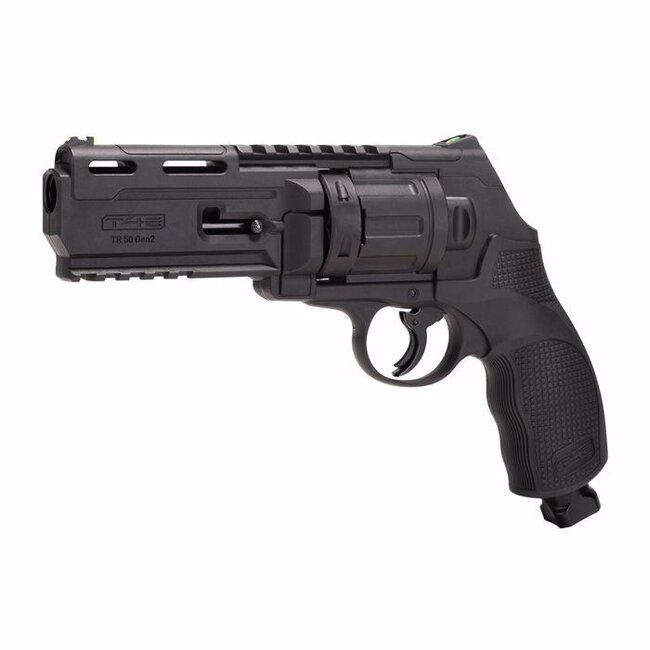
Category 2: .50 caliber CO2 defensive launchers (P2P and T4E)
In 2026, one of the most common “home defense airgun” discussions in Canada centers on .50 caliber CO2 launchers, often sold under lines associated with T4E Canada and the P2P defense launcher category. These platforms typically fire .50 caliber round balls, powder/marking rounds, and impact projectiles.
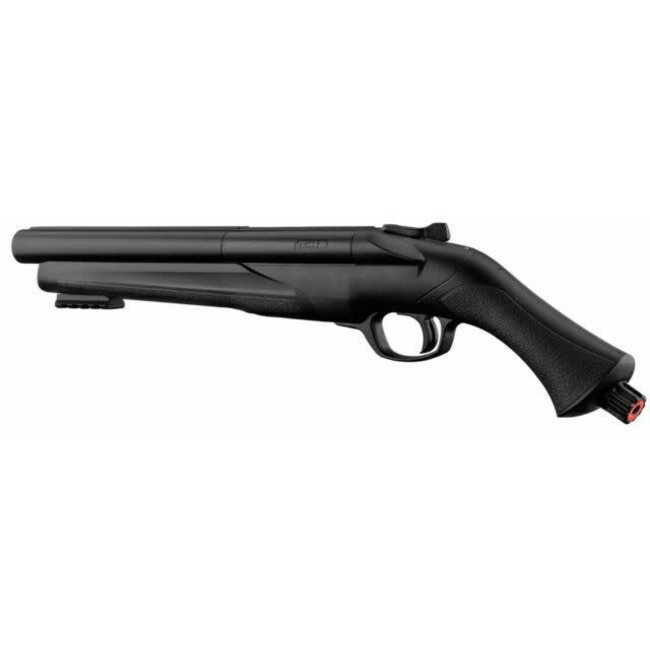
Two well-known examples are:
These products are often sought by people who want something more purpose-built than a paintball marker but still within a less-lethal toolset.
What they do
- Launch .50 caliber rounds designed for training, marking, or impact
- Offer handgun-like handling in compact platforms
- Use CO2 for propulsion, which can be convenient but temperature-sensitive
What to watch for (legal and practical)
- Classification can depend on specs. Velocity/energy and design matter. Always confirm the Canadian-legal configuration from the retailer.
- Replica concerns. Avoid products that are designed as near-identical replicas of real firearms if they could fall into prohibited categories. When in doubt, ask before you buy.
- Use-of-force still applies. Firing an impact projectile at close range can be treated as serious force, especially if aimed at the head/neck.
If you’re comparing options within this category, it’s often more useful to think in terms of reliability, loading system, projectile availability, and safe handling than raw “stopping power.”
Category 3: Pepper ball and irritant ball systems in Canada
People frequently ask whether a pepper ball gun Canada option is legal. The reality is nuanced. In Canada, certain chemical irritants (including pepper spray designed for use on humans) are heavily restricted and may be prohibited weapons. Products marketed for use against humans, or containing prohibited irritants, can create serious legal exposure.
Some launchers are designed to fire irritant/powder balls, but legality depends on what the projectile contains, how it’s marketed, and applicable weapons classifications. Even if a launcher itself is legal to own, the payload (the specific irritant projectile) may not be.
Practical takeaway
- Do not assume that “pepper balls” are automatically legal in Canada.
- Confirm that the specific ammunition is lawful to possess and ship to your province.
- Prefer clearly compliant marking/training powders if your goal is identification and distraction rather than chemical incapacitation.
If you want to browse defensive/marking projectile types that are sold for these platforms, see Defense Ammunition for examples of what’s commonly offered in Canada.
Category 4: Rubber and polymer impact rounds (“rubber bullet” questions)
The phrase rubber bullet gun Canada is common, but it can be misleading. Many consumer products are not “rubber bullets” in the law-enforcement sense; they’re rubber or polymer balls designed for training/impact use. In Canada, the legality often comes down to:
- The launcher’s classification (airgun/firearm/replica issues)
- Whether the ammunition is prohibited (usually not, but verify)
- How and where it’s carried/used
From a self-defence perspective, impact rounds carry higher injury risk than marking rounds. If you’re considering them for non lethal home protection, you should think ahead about safe target areas (generally avoiding head/face/throat), indoor distances, and what you would tell police about why you believed that level of force was necessary.
So what can you own in 2026? A practical checklist
Instead of trying to force a single yes/no answer for every product marketed as a self defense gun Canada option, use this ownership checklist:
- Check Canadian configuration: Confirm the exact model version sold in Canada (power level and design).
- Avoid prohibited replicas: If it looks and is designed to be a near-exact copy of a real firearm, be cautious and confirm legality.
- Know your province and city rules: Discharge bylaws, transport rules, and storage expectations can vary.
- Choose compliant ammunition: Especially important for irritant/chemical payloads.
- Plan for safe storage: Keep it inaccessible to children and unauthorized users, and store CO2/air responsibly.
What you generally should avoid (or research very carefully)
Some items commonly associated with “legal self defense weapons Canada” searches are actually where people get into trouble:
- Products marketed as pepper spray for humans: Often prohibited; don’t assume legality.
- Concealed carry for self-defence: Canada is not a permissive concealed-carry jurisdiction for civilians. Carrying any weapon “for the purpose of self-defence” can create legal issues depending on the item and circumstances.
- Improvised or booby-trap style setups: Setting traps is illegal and extremely risky.
- Anything you can’t clearly explain: If you can’t articulate a safe, lawful purpose (training, pest control where lawful, sport), don’t buy it for “just in case.”
Storage and transport: where lawful owners can still get burned
Even when you own a lawful airgun or launcher, careless handling can turn into a police problem fast—especially in shared housing, apartments, or when transporting.
Best-practice storage (common-sense and defensible)
- Store unloaded when not in active use
- Keep it in a locked case or locked room when possible
- Store ammunition separately where practical
- Keep CO2 cartridges/cylinders stored safely and away from heat
Transport basics
- Use a case or bag; don’t display it
- Keep it unloaded during transport
- Go directly to/from lawful destinations (range, training area, property where permitted)
This is as much about public safety perception as it is about law. A “less lethal” launcher can still generate a firearms-style emergency response if seen in public.
Using an airgun for home defence: what “reasonable” looks like
If you’re thinking about home defense canada planning, focus less on gear and more on decision-making. Courts and police will look at what you perceived, what you did to avoid violence, and whether your response was proportional.
Reasonable-force principles that matter in real cases
- Purpose matters: Using force to stop an imminent threat is different than using force to punish or “teach a lesson.”
- Distance and target area matter: At indoor distances, projectile injuries increase. Head/eye shots can be catastrophic.
- Stopping matters: Once the threat ends (they flee, they comply, the danger passes), continuing to use force can become unlawful.
A good non lethal home protection plan usually includes: early detection (lights/cameras), barriers (locks), a safe room plan, communication (calling 911), and a last-resort tool you can use safely if escape is not possible.
Choosing a “home defense airgun” setup: practical considerations
If you’re looking at less lethal guns Canada options as tools of last resort, here are non-hype factors that make a real difference:
- Reliability in your climate: CO2 can lose pressure in the cold. Indoor storage temperature matters.
- Ease of operation: Can you load, aim, and operate it under stress?
- Target identification: You are responsible for what you shoot. A white light and a clear sight picture can prevent tragedies.
- Round selection: Marking/powder vs impact rounds change both effects and legal risk.
- Training: Familiarity reduces negligent discharges and improves decision-making.
For a look at current categories Canadians use for defensive training and launcher-style platforms, you can browse Self Defense/Paintball/Training, including Self Defense Pistols and Defense Rifles.
Common misconceptions (and safer ways to think about them)
“If it’s under 500 fps, it’s a safe legal self-defence tool.”
Lower-powered airguns may be easier to buy, but they can still seriously injure. Legality of ownership doesn’t equal legality of use. Treat any launcher as potentially dangerous and legally consequential.
“I can buy a self defense pistol Canada legal and keep it by the door.”
Canada does not recognize a broad right to keep weapons specifically for self-defence. Many lawful owners keep airguns for sport/training; using them defensively is judged case-by-case. If your entire purpose is “self-defence,” be careful: intent can matter for certain weapons offences depending on the item.
“Pepper ball is just like bear spray, so it must be fine.”
Bear spray is regulated and intended for animals; using it on humans can still lead to charges depending on circumstances. Human-directed pepper spray is often prohibited. “Pepper ball” payload legality must be verified in Canada.
“Less lethal means I can shoot first to scare someone.”
Discharging any projectile at a person is serious. Warning shots create safety risks (misses, ricochets, unintended victims) and can be hard to justify. If you ever use a defensive launcher, be prepared to explain why it was necessary to protect yourself or others from an imminent threat.
If you ever have to use force: what to do immediately after
If a situation escalates to any use of force, your priority is safety and lawful reporting:
- Stop when the threat stops. Create distance and move to safety if possible.
- Call 911. Report the incident, request police/medical help, and follow instructions.
- Secure the device safely. Don’t approach the suspect; don’t handle evidence unnecessarily.
- Document what you can. Note time, location, what you perceived, injuries, witnesses, and any video footage.
- Get legal advice. Self-defence incidents can become complex quickly.
FAQ: quick answers to the questions Canadians ask most
Is a paintball gun Canada legal to own?
Generally, yes. But you still must follow local discharge bylaws, transport safely, and use it responsibly. Misuse can lead to criminal charges.
Are T4E Canada launchers legal?
Many are sold lawfully in Canada in specific configurations, but legality can depend on the exact model/specs and whether it’s considered a prohibited replica or otherwise regulated. Confirm the Canadian-legal version before buying.
Is there a “legal self defense weapons Canada” list?
Not in a simple way. Many items are legal to own for lawful purposes but can be illegal to carry or use for self-defence depending on intent and circumstances. Focus on compliance and a home safety plan rather than a “self-defence weapons list.”
Can I carry a less lethal launcher for protection?
Carrying items specifically “for self-defence” can create legal risk in Canada depending on what it is and how it’s carried. Laws and enforcement can vary. If your use-case is outside the home, get proper legal guidance.
What ammunition is best for non lethal home protection?
From a risk-management perspective, marking/powder rounds can support identification and deterrence with generally less injury risk than impact rounds. However, every projectile can injure, and legality of irritant payloads must be confirmed.
Bottom line: what you can own in 2026—and what to prioritize
In 2026, Canadians can generally own a range of air-powered and CO2-powered options that people associate with non lethal defense Canada, including many paintball markers and certain .50 caliber defensive launchers sold in compliant configurations. But the most important “legal” issues are often not at checkout—they’re about classification (especially replicas and power), safe storage and transport, and the reasonableness of any defensive use.
If you’re building a home defense Canada plan, treat any tool as a last resort. Invest more time in prevention, de-escalation, safe-room planning, and training than in chasing the strongest “less lethal” option. That approach is more likely to keep you safe—and keep you on the right side of Canadian law.


