
FX DRS Customization: From Classic to Tactical in 5 Upgrades
The fx drs is one of the most interesting modern PCP platforms because it starts clean and classic, then adapts easily into a purpose-built setup. Whether you’re building a compact pcp for stalking, a bench-friendly tack driver, or a true fx drs tactical style rig, the DRS ecosystem makes drs customization surprisingly straightforward.
This guide is written with a commercial mindset: which upgrades matter most, what each one changes in real use, and how to choose parts that match your goals. Think of it as a “best next step” roadmap—from a factory rifle to a more capable tactical airgun—using five upgrades that consistently deliver.
Before you upgrade: define the DRS you want
Most upgrade regrets come from chasing features instead of outcomes. Before buying fx drs accessories, decide what “tactical” means for your DRS:
- Handling first: faster transitions, better balance, shorter overall feel, better grip/cheek weld.
- Optics first: improved eye relief, more elevation adjustment, more rigid mounting.
- Power/efficiency first: a wider tuning window, better consistency at your chosen energy, or more shot count.
- Field reliability first: fewer snags, cleaner fill setup, less “stuff” hanging off the rifle.
The five upgrades below cover those outcomes and stack together well. You don’t need all five to get a serious transformation, but doing them in this order keeps your build coherent.
Upgrade 1: Swap to a DRS chassis for a true tactical foundation
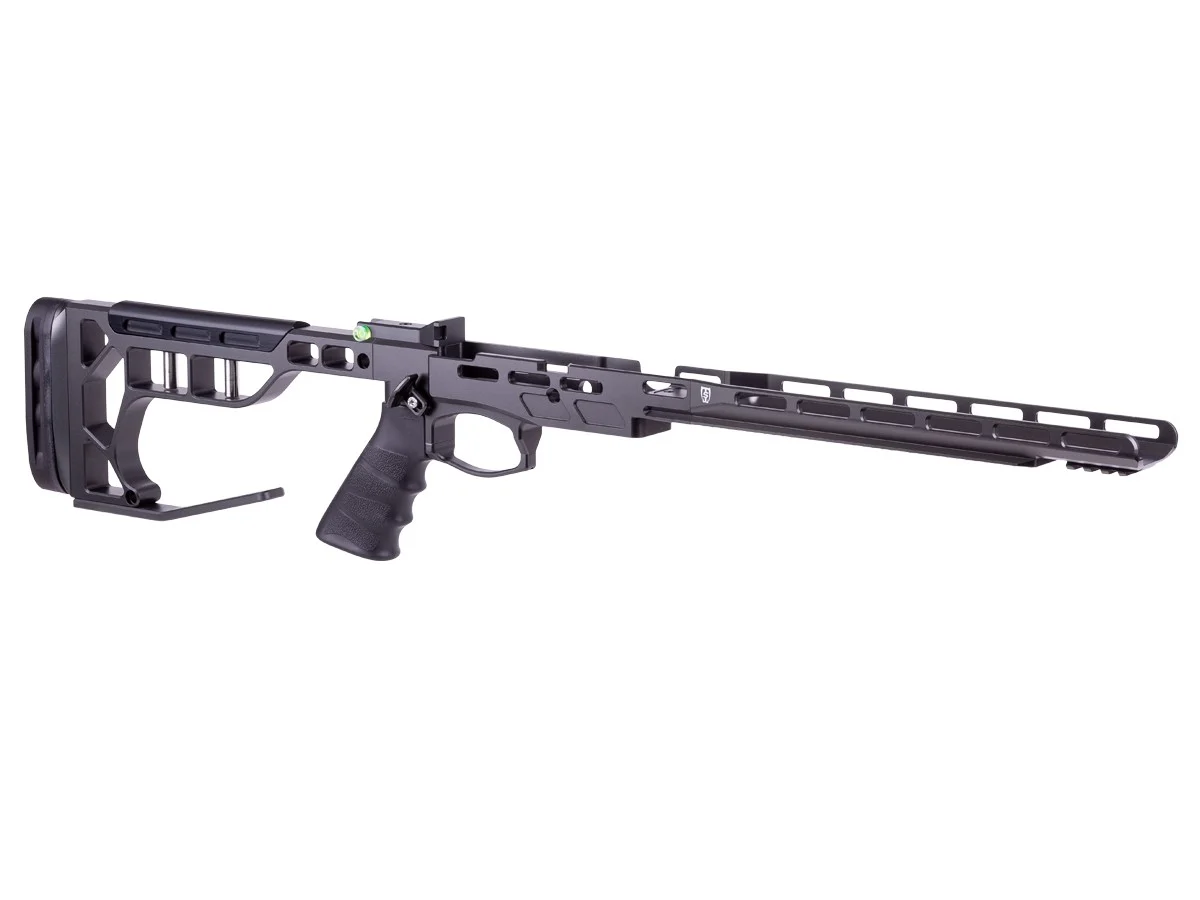
If you want your DRS to look and feel “tactical,” the biggest single change is a chassis. It’s not just aesthetics—this is where ergonomics, accessory mounting, and consistency of your shooting position all get better at once. A good drs chassis can tighten up how the rifle shoulders, how repeatable your cheek weld is, and how comfortably you manage recoil impulse and follow-through (yes, even on PCPs, follow-through matters).
When evaluating chassis options for fx airgun upgrades, focus on what affects your day-to-day shooting:
- Adjustability: cheek height and length-of-pull are key for optics comfort and repeatable head position.
- Accessory interfaces: Picatinny/Arca/M-LOK style options determine how easy it is to mount bipods, lights, or sling hardware.
- Grip geometry: a more vertical grip often feels “tactical” and helps trigger control from supported positions.
- Balance: chassis weight distribution can make a DRS feel steadier on a bag or quicker in the hands.
One practical option is the FX DRS Chassis - Grey. For shooters trying to bridge target precision and field practicality, a chassis like this is often the point where the rifle stops feeling “factory” and starts feeling like a purpose-built system.
If you’re not sure whether a chassis is worth it: if you’ve ever had to “hunt” for your cheek weld, fight an awkward wrist angle, or struggle to mount accessories cleanly, a chassis is typically the highest-impact upgrade you can buy.
Upgrade 2: Add a high Picatinny rail (and stop fighting your scope setup)
Optics mounting is one of the most overlooked parts of drs customization. Many shooters spend a lot on scopes, then under-invest in the interface that holds the scope to the gun. A quality rail solves three common DRS problems at once:
- Elevation travel: an angled rail helps keep your scope’s internal adjustment in a more usable range, especially at longer distances.
- Mounting flexibility: extra height and rail length can improve eye relief and reduce the “cramped” feeling when setting up.
- Rigidity: a solid rail is a stability upgrade—less chance of subtle movement and less frustration when re-zeroing.
A strong choice here is the High Picatinny Rail - DRS (30 MOA). The 30 MOA cant is particularly helpful if you’re stretching your DRS further—whether for target work, pest control distances, or simply wanting to keep your turret settings more centered.
Why this feels “tactical”: a stable, high, repeatable optic setup is one of the defining traits of a modern tactical airgun build. It also pairs naturally with a chassis because the two upgrades together improve head position, sight picture, and the speed at which you acquire targets.
Upgrade 3: Install a DRS plenum kit for a broader tuning window
If you want performance beyond the stock feel—especially if you’re chasing higher energy, heavier pellets, or more consistent output—air management is where the DRS platform can really shine. A drs plenum kit increases usable air volume in the firing cycle, which can open up a more forgiving tuning range.
What a plenum upgrade can do in practical terms:
- Support heavier projectiles: more stable acceleration for heavier pellets or slugs (depending on your setup).
- Smoother delivery at a chosen power: less “peaky” behavior when tuning.
- Potential consistency gains: when tuned correctly, you may see tighter spreads and more repeatable point of impact.
It’s also one of the upgrades that most clearly separates casual setups from a serious fx drs tactical build: the rifle becomes less “one-size-fits-most” and more “built for a purpose.”
Important note: plenum upgrades should be approached with a plan. The best results come when you match plenum volume with the rest of the system—regulator settings (if applicable), hammer spring tension, and the projectile you actually intend to shoot. If you mainly shoot at shorter distances and value maximum efficiency, you might not need to chase higher power at all. But if your goal is a hunting-leaning build, this is one of the most meaningful hunting airgun upgrades available.
Upgrade 4: Clean up the small stuff—field-ready accessories that matter
Not every upgrade needs to be dramatic to be valuable. Some of the best fx drs accessories are the small, practical pieces that make the rifle easier to live with: less snagging, fewer leaks, faster setup, and a cleaner overall build. This is where “tactical” becomes functional rather than cosmetic.
Fill port management: a simple reliability win
A fill port is a dirt magnet in the field. A secure plug helps keep debris out during transport and hunting. The FX DRS Fill Port Plug is a small part, but it’s the kind of detail that keeps a rifle running smoothly—especially if you shoot outdoors in wet grass, dust, or snow.
Accessory mounting: choose consistency over clutter
“Tactical” can quickly become “busy.” Add-ons should solve a problem, not create new ones. Good examples of practical add-ons (depending on your chassis and rail choices) include:
- A stable bipod interface for prone or bench work.
- A sling setup that carries comfortably without banging into the rifle’s controls.
- Low-profile hardware that won’t snag on brush or cases.
The goal is to end up with a compact, coherent system—especially if you’re building a compact pcp rig that you’ll carry a lot. If it catches, rattles, or pokes you while hiking, it’s not helping.
To browse parts that are actually designed for the platform, start with DRS Accessories and the wider FX Airguns collection.
Upgrade 5: Treat tuning as an “upgrade” (and do it with intent)
The most underrated “part” in fx airgun upgrades is the setup itself. Once you’ve changed the chassis/rail and possibly the plenum, the rifle benefits from being tuned to your actual use case. This is also where you can waste the most time if you tune randomly.
Here’s a practical, repeatable tuning approach for a DRS:
- Pick one projectile first: decide the pellet/slug you’ll actually buy and use. Don’t tune with whatever is on hand and then switch later.
- Pick your distance band: short-range pesting and longer-range target work ask for different priorities (quiet/efficient vs. flat/fast).
- Chase consistency before max power: a stable velocity spread often produces better real-world accuracy than pushing the highest number.
- Confirm accuracy with groups, not just a chronograph: your best tune is the one that prints tight groups, reliably.
- Document settings: keep notes so you can return to a known-good configuration after experimenting.
If you want to go deeper into hardware and tuning components, the Custom Parts & Tuning collection is the right place to compare options and build a sensible plan rather than buying parts blindly.
Done well, tuning is what makes your “tactical” build more than a look. It’s the step that makes the rifle predictable—especially important for hunting scenarios where you need first-shot confidence.
Recommended upgrade paths (pick the one that matches your goal)
If you’re not sure what order to buy parts in, these bundles of priorities tend to work well for most DRS owners.
Path A: Classic-to-tactical handling (most noticeable day one)
- Chassis first for ergonomics and mounting options.
- High Picatinny rail to dial in scope height/eye relief.
- Small accessories (fill port plug, mounting cleanup).
This path makes the rifle feel “built” even before you touch performance tuning.
Path B: Hunting-first performance (practical power and consistency)
- Plenum kit to broaden your tuning window.
- Tuning around your chosen hunting pellet/slug and range.
- Chassis if you want better carry, grip, and accessory mounting.
This is a strong approach for shooters prioritizing hunting airgun upgrades where the rifle must be predictable and repeatable in the field.
Path C: Optics and precision (target/bench leaning)
- High Picatinny rail (30 MOA) to preserve elevation range.
- Chassis to stabilize position and improve repeatability.
- Tuning to shrink spreads and tighten groups at your match distance.
This path focuses on the interface between you, the optic, and the rifle—where most accuracy is won or lost.
What “tactical” really means on an FX DRS
A tactical build isn’t defined by how many parts you bolt on. It’s defined by outcomes:
- Faster to shoulder with a repeatable cheek weld.
- More stable sight picture and less scope-mount compromise.
- More consistent performance when tuned for your actual pellet/slug.
- Cleaner, more reliable field handling with sensible accessories.
The DRS platform supports all of that without turning your rifle into an unwieldy science project. Start with the foundation (chassis), make optics mounting effortless (rail), expand capability if your use demands it (plenum kit), and finish with the practical details (small accessories and tuning). That’s the simplest way to take a classic fx drs and end up with a capable, modern tactical airgun that feels purpose-built.
Shop-ready next steps
If you’re comparing options right now, these category pages make it easy to stay within proven-fit parts for the platform:
- DRS Accessories for platform-specific add-ons.
- FX Airguns for broader FX parts and compatible gear.
- Custom Parts & Tuning for performance-focused components.
For quick wins, start with the chassis and rail. For capability gains, prioritize the plenum and a structured tuning plan. Either way, a thoughtful approach to drs customization will give you a DRS that looks right, feels right, and performs the way you intended.


