
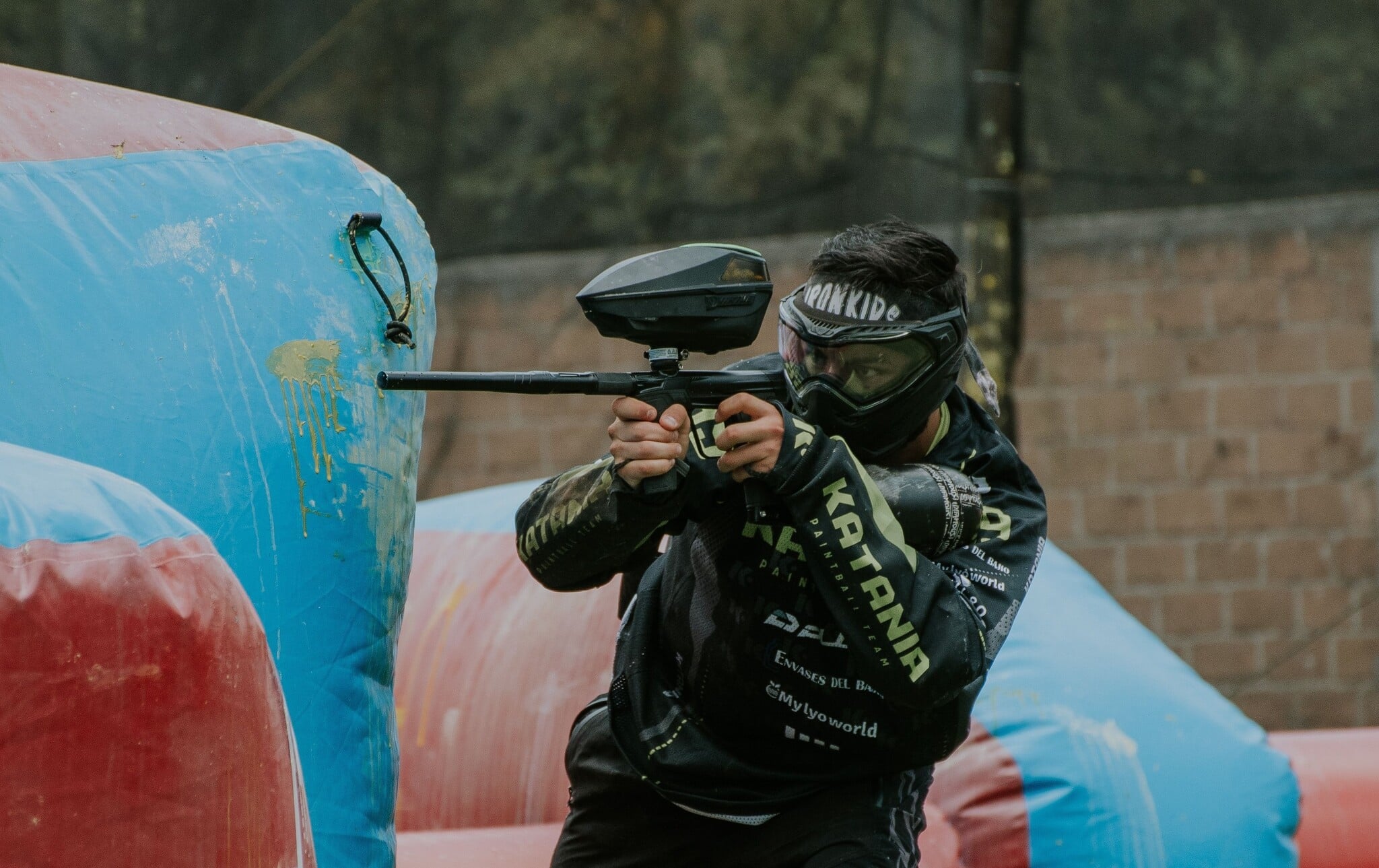
Paintball and Training Uses for Your Defense Launcher
Most T4E and P2P defense launchers fire paintballs from the same barrel they fire defensive rounds from — so the launcher sitting in your bedroom can double as a paintball marker on a Saturday. Paintball rounds cost a fraction of defensive ammunition, which means recreational shooting doubles as the practice you were meant to be doing anyway. You can stock rounds for both jobs in our self-defense and training collection, and this guide explains how to run one platform for both without compromising either.
Key takeaways
- Same platform, different round: .43, .50, and .68 T4E and P2P launchers accept paintballs and defensive rounds interchangeably.
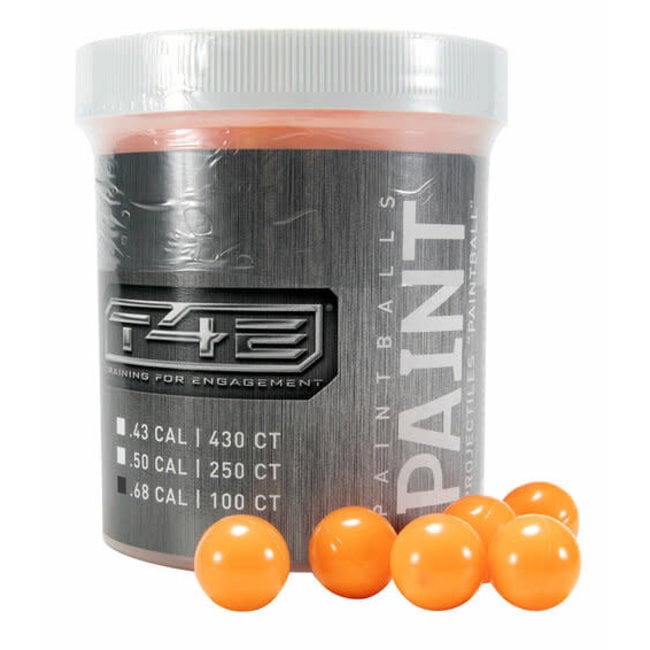
- Practice rounds cost pennies next to defensive rounds — a 100-count of .68 paintballs runs $13.99, while defence-rated rounds run several times that per shot.
- Recreational use is training in disguise: grip, sight picture, and trigger control transfer directly.
- Keep the two ammo types physically separated and labelled, so you never discover the wrong round loaded when it matters.
- CO2 is the consumable that stalls a session — buy it in multipacks and expect fewer shots per cartridge in the cold.
Can a home defense launcher actually shoot paintballs?
Yes — most .43, .50, and .68 calibre T4E and P2P launchers are built on the same platform as recreational paintball markers and accept paintballs directly. Switching between recreational and defensive use means changing the round you load, not the equipment. The pressure system, barrel, and trigger group stay the same.
This is one of the more practical arguments for a T4E or P2P system over a single-purpose device. A launcher that only comes out during an emergency is a launcher you have never really learned to operate. One that sees monthly use is a different proposition entirely.
What is the real cost difference between paintball and defensive rounds?
Recreational rounds cost roughly a tenth of what defensive rounds cost per shot, which is exactly why they should carry the volume of your shooting. Paintballs mark, break, and cost little. Defensive rounds are built for impact and should stay reserved for the drills that need them and the magazine you keep loaded.
The table below lays out the in-stock options across both jobs.
Rounds and CO2 by use case (current pricing)
| Use case | Round or consumable | Examples we carry | Price (CAD) | Notes |
|---|---|---|---|---|
| Backyard play, .68 | Paintballs | T4E Paintballs .68 Cal Orange 100ct | $13.99 | Cheapest way to put rounds downrange |
| Volume play, .43 | Paintballs, bulk | T4E Paintballs .43 Cal Blue 430ct | $39.99 | Bulk tub for a full session |
| Reusable practice | Rubber balls | Rubber Balls .68 Cal 100ct; .50 Cal 250ct; T4E Rubber Balls .50 Cal 10ct | $8.50–35.00 | Reusable, lower penetration |
| Defence drills | Powder and rubber rounds | T4E Powder Balls .43 Cal 500ct; P2P Rubber Rounds .68 Cal 20ct | $14.99–69.99 | Frangible and blunt-impact options |
| 12g CO2 | Cartridges | Umarex CO2 12g 12ct — non-threaded | $11.85 | Fits most quick-pierce launchers |
| Bulk CO2 | 88g/90g cylinders | Sig Sauer 90g CO2 Cylinders 2-Pack | $26.50 | Confirm your launcher accepts one |
Our self-defense ball ammunition guide goes deeper on how each defensive round behaves on impact, if you want the full breakdown before you stock up.
Which platforms suit recreational use as well as defense?
Any launcher with reasonable capacity and a comfortable grip works for both, though magazine-fed and carbine formats hold up better across a long recreational session. A five-shot revolver is excellent for the home-defense role and tedious for an afternoon of backyard play.
If recreational use is genuinely part of your plan, favour a format with spare magazines available. The spare magazines selection covers the common platforms, and a second magazine turns a stop-and-reload session into a continuous one. Carbine formats in the self-defense rifles range trade portability for capacity, which suits field play better than a compact pistol does.
How much CO2 does regular recreational use take?
CO2 is the consumable that ends sessions early, so buy it in multipacks and keep spares warm. A 12g cartridge covers a short session in a pistol; an 88g or 90g cylinder covers many times that on a platform that accepts one. Cold weather cuts output noticeably, which in a Canadian autumn is not a minor footnote.
Stock up through the CO2 cylinders collection, and if you want to work out which format suits your launcher, our guide to maximizing shots per cartridge covers the techniques that stretch each fill.
Keeping the launcher defense-ready while you play with it
Two habits cover it: separate your ammunition physically, and check the launcher over after every session. Keep recreational rounds and CO2 in one labelled container and defensive rounds in another, stored near where the launcher lives. The failure mode you are guarding against is discovering paintballs loaded at the worst possible moment.
After each session, wipe the barrel and grip, check the CO2 seal for leaks, and store it dry. A launcher that sees regular use cycles more than one that sits untouched, so small maintenance matters more, not less. If velocity drops or the trigger pull changes, sort it out during a normal practice session rather than finding out during an emergency.
Backyard play, safety rules, and getting the household comfortable
Recreational sessions are the easiest way to get everyone in the house comfortable handling the launcher safely. Simple backyard targets let anyone who would be nervous in an emergency practise loading, aiming, and firing in a setting with no pressure attached.
Ground rules keep it that way: eye protection every single time, a clear backstop behind the target, one person handling the launcher at a time, and muzzle discipline treated as non-negotiable even in a casual game. Velocity limits and where you may shoot vary by municipality, so check your local bylaws before setting anything up in the yard. Targets from our accessories range are worth the small cost over improvised ones, mostly because they contain the mess.
Frequently asked questions about paintball and defense launchers
Is paintball legal in Canada?
Paintball markers are legal to own and use in Canada. Velocity limits and rules about where you can shoot vary by municipality, so check local bylaws before organizing backyard play. This article is informational, not legal advice.
Can I use the same launcher for paintball and home defense?
Yes, on most T4E and P2P platforms. You load a different round for each job. Keep the two ammo types clearly separated so you always know what is currently loaded.
Will paintballs damage a defense launcher?
No, these platforms are designed for paintballs. Clean the barrel after a paint session, since dried paint residue is the main thing that affects consistency on the next outing.
Is paintball an expensive hobby?
At a dedicated field it can be. Backyard play with a launcher you already own for defense is cheap — the ongoing cost is rounds and CO2, and both come down in multipacks.
Where to start?
Buy the cheap rounds in bulk and the defensive rounds in small quantities: a few hundred paintballs for volume, 40 to 60 defensive rounds for the magazine you keep loaded. Then add CO2 in multipacks so a session never ends early.
To shop online, start with these collections:
- Self-defense and training category — launchers built to handle both roles.
- Self-defense ammo — paintballs, rubber, powder, glass breaker, and aluminum rounds.
- CO2 cylinders — 12g cartridges, 88g/90g bulk cylinders, and adapters.
- Spare magazines — a second mag doubles a recreational session.
- Self-defense rifles — carbine formats for higher-capacity field play.
If you already own a launcher and have never shot it recreationally, start with one bag of paintballs and a multipack of CO2, and treat the first session as a function check rather than a game. Our T4E calibre guide for Canada and our Umarex T4E buyer's guide are both good next reads if you are still choosing a platform. Our women's guide to home defense launchers covers grip and fit, and our layered home security strategy guide shows where the launcher fits alongside lighting, alarms, and cameras.


