
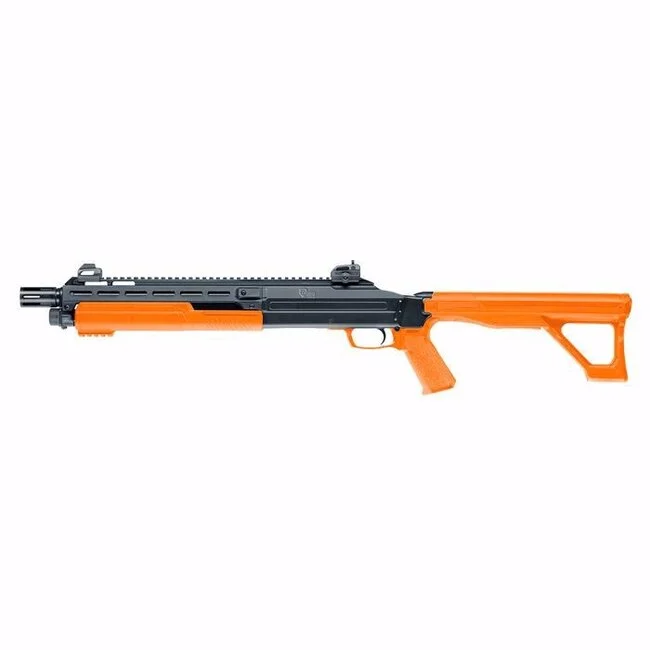
Building a Layered Home Security Strategy: Where a Less-Lethal Launcher Fits
A layered home security strategy stacks cheap deterrents first — lighting, locks, alarms, cameras — and keeps a less-lethal launcher as the last layer, for the rare case someone is already inside. Most break-ins happen because a house looks easy, not because an intruder wants a confrontation. Lighting and sensors change that calculation before anyone reaches your door. You can see the last-layer options in our self-defense and training collection, and this guide explains where each layer sits and what it actually buys you.
Key takeaways
- Order matters more than gear: motion lighting and entry sensors stop more break-ins than anything you would reach for in the moment.
- Cameras buy time, not safety — a phone alert is what makes any response plan useful instead of too late.
- A safe room is the cheapest layer and mostly costs planning: a solid door, a lock, and a charged phone.
- The launcher is layer five, not layer one: it only matters once lighting, locks, alarms, and cameras have all failed.
- Canadian self-defence law judges your response, not your equipment — treat this as the hardware guide and read the legal one separately.
What does a layered home security strategy actually mean?
Layering means stacking several independent defenses so no single failure leaves your home exposed. Lighting deters someone casing the property, locks and sensors slow entry, cameras warn you while it is happening, and a safe room plus a less-lethal option cover the case where someone still gets inside. Each layer works on its own.
The common mistake is skipping straight to the last layer. Buying a launcher before you have fixed a dark side entrance or a door with no sensor is backwards — the cheapest upgrades sit at the front of the timeline, not the end of it.
Which layers do the most work for the least money?
Motion-activated exterior lighting and entry sensors on doors and windows deliver the most protection per dollar. Lighting exposes anyone approaching before they reach a door, and most people looking for an easy target simply move on. Sensors cut how long an intruder is willing to stay and, at night, they wake you up.
Focus lighting on the spots a house leaves dark: side doors, back patios, and the space beside a garage. Pair sensors with a hub so you get a phone alert rather than only a siren. The table below shows how the layers stack by cost and by how early each one acts.
Home security layers, earliest-acting first
| Layer | When it acts | Relative cost | What it buys you |
|---|---|---|---|
| Motion lighting | Before approach | Low | Deterrence, no monitoring fee |
| Locks and door reinforcement | At entry | Low | Time, and noise while they work |
| Door and window alarms | At entry | Low to moderate | A warning, and you awake |
| Cameras and alerts | During entry | Moderate | Awareness and a record |
| Safe room | After entry | Mostly planning | Somewhere to retreat and call 911 |
| Less-lethal launcher | Last resort, inside | Moderate | An option if a threat reaches you |
Do cameras and monitoring actually help?
Cameras do not stop a break-in, but they change what happens in the seconds after one starts. A camera with a phone alert tells you something is happening while it is still happening. Without that warning, every response plan you have made — retreating to a safe room, calling police, reaching for a launcher — starts too late to matter.
Cover your main entry points first, then the blind spots lighting cannot reach, like a back fence line or a basement window. Local storage on a wireless system avoids a subscription and still gives you the footage. Monitoring adds a professional response, though the deterrent effect itself comes from light and noise.
Where does a less-lethal launcher fit in the stack?
A launcher belongs in or near your safe room, stored ready but secured, used only if someone is already inside and a threat is immediate. It is the layer of last resort — not a substitute for the four layers ahead of it, and not something to carry around the house on a noise investigation.
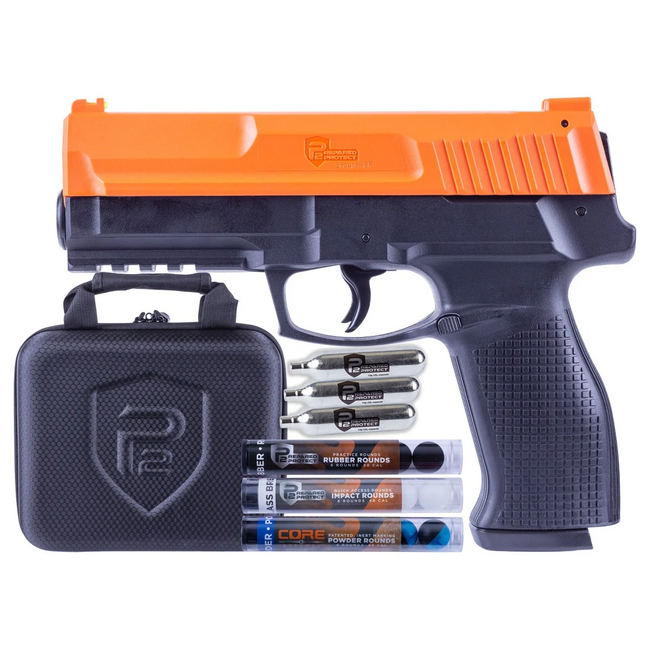
In Canada, less-lethal launchers have become the common legal option for this role, since pepper spray and stun guns are not lawful for civilian self-defence. Format matters less than whether you can reach and operate it under stress. Compact revolvers are simple, pistol-format kits hold more rounds, and carbine formats trade portability for capacity. The comparison below covers in-stock examples.
Less-lethal launcher formats for a home security plan (current pricing)
| Format | Calibre | Best fit in the stack | Examples we carry | Price (CAD) |
|---|---|---|---|---|
| Revolver | .50 | Simplest to operate under stress | T4E TR50 Gen 2 .50 Cal Revolver — 6-shot rotary magazine, ships with 5 magazines | $159.99 |
| Compact pistol | .50 | Small hands, tight quick-access storage | P2P HDP 50 Compact w/Powder Rounds — 4 rounds, 8g CO2 | $139.99 |
| Double barrel | .68 | Two shots without a magazine cycle | T4E TS 68 Gen2 Double Barrel .68 Cal | $209.99 |
| Magazine-fed kit | .68 | Higher capacity, spare mags available | P2P Secure 68P Impact Defense Kit — 6-round magazine, CO2 and mixed rounds included | $279.99 |
| Carbine | .68 | Capacity over portability | T4E TC 68 Paintball Marker .68 Cal | $619.99 |
| Spare magazines | .68 | So a reload is not a loading job | Spare 6-Shot and Extended 9-shot Magazines for the Secure 68P | $27.95–37.95 |
Whichever format you choose, keep it fed. Rounds from our self-defense ammo collection and a spare from the magazines selection keep that last layer ready — not ready in principle, ready tonight. Whether that ends up being a defense pistol or a defensive carbine depends on your storage spot and who else is in the house.
How does Canadian law fit into a security strategy?
Canadian self-defence law judges your response, not your shopping list: whether you reasonably believed force was being used against you, and whether what you did was proportionate. Owning a less-lethal launcher is lawful. Using one is assessed after the fact, against what a reasonable person would have done in your position. This article is informational, not legal advice.
This guide covers the hardware layers only. Our Canadian legal guide to non-lethal home defense airguns works through ownership rules, and our home defense plan guide covers the conduct side — retreat, 911, and what you say to responding officers. None of this is legal advice, and a one-time consultation with a lawyer is worth it if you are serious about your plan.
Frequently asked questions about layered home security
Do I need a monitored alarm system for a layered strategy to work?
No. A local, unmonitored alarm still alerts you and pushes most intruders back out the door. Monitoring adds a professional response, but the deterrent itself comes from noise and light, which any basic system provides.
Is a less-lethal launcher a replacement for an alarm system?
No, and treating it that way inverts the plan. A launcher only comes into play if someone is already inside. Lighting, locks, alarms, and cameras exist to stop that from happening at all.
Where should I store a launcher in a layered plan?
Secured but reachable from your safe room or main bedroom, with rounds kept alongside it. Time yourself getting it out. If it takes more than a few seconds, the storage is wrong for the job.
Do cameras replace the need for exterior lighting?
No. Cameras record and alert, but lighting is what discourages someone from approaching in the first place. The two do different jobs, and most effective setups run both.
Where to start?
Fix the front of the timeline first: motion lighting on dark entry points, sensors on doors and windows, then a camera with phone alerts. Add the safe room plan, and only then decide which launcher format suits your storage and your household.
To shop online, start with these collections:
- Self-defense and training category — the full range of less-lethal platforms and rounds.
- Self-defense pistols — compact and full-size launchers for the last layer.
- Self-defense rifles — carbine-format launchers for higher capacity.
- Self-defense ammo — rubber, powder, glass breaker, and aluminum rounds.
- Spare magazines — so a reload is not a search.
If you are starting from nothing, spend on lighting and sensors before a launcher, then buy the launcher you can actually operate rather than the most powerful one on the shelf. For platform context our comparison of P2P vs T4E home defense launchers is a good next read, and if fit or recoil is a concern for anyone in your household, our women's guide to home defense launchers covers grip sizing and training. If the launcher will see recreational use too, our guide to paintball and training uses explains how to keep it defense-ready while getting cheap practice out of it.


