

Multi-Pump Air Rifles Explained: How Variable Power Works
Multi-pump pneumatic air rifles represent one of the most versatile and economical designs in airgun history. Unlike break-barrel spring rifles with fixed power or PCP airguns requiring expensive charging equipment, multi-pump rifles put complete control in your hands—literally. By simply pumping the forearm multiple times, you determine exactly how much power each shot delivers. But how does this ingenious system actually work? Understanding the mechanics, physics, and practical applications of variable power helps you maximize your multi-pump rifle's potential.
At Airgun Source Canada, we've helped thousands of Canadian shooters discover the versatility and value of multi-pump rifles over our 20+ years in business. This comprehensive guide explains the engineering behind variable power pneumatic systems and shows you how to optimize performance for every shooting situation.
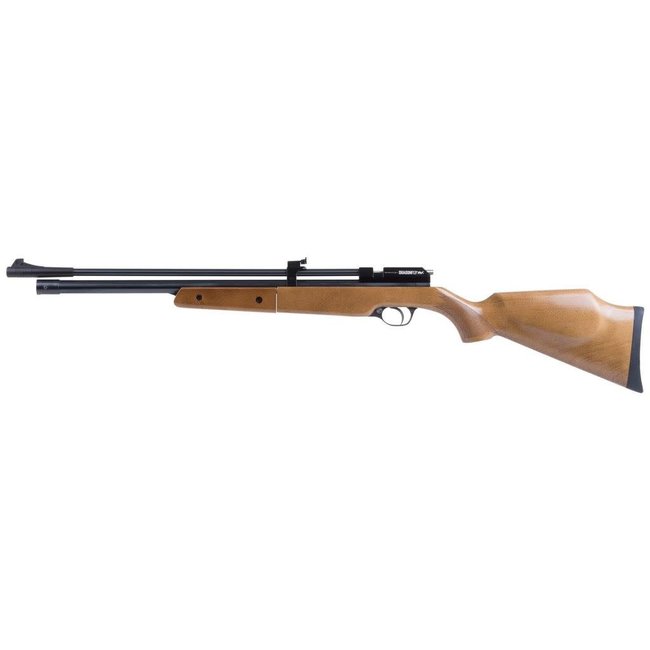
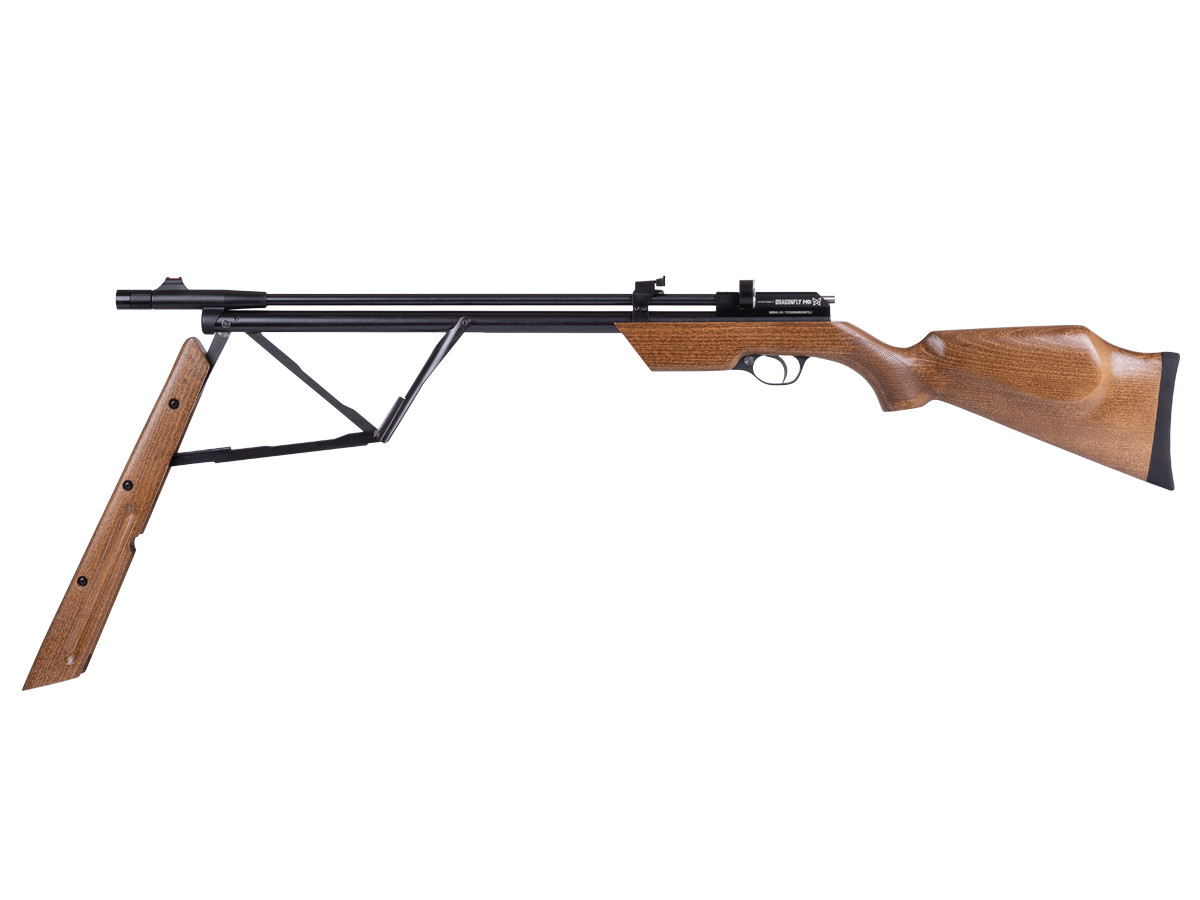
The Basic Pneumatic Principle
Multi-pump air rifles operate on a simple yet effective pneumatic principle: compressed air, when released rapidly, propels a projectile down the barrel. The more air you compress into the reservoir, the greater the energy available to push the pellet, and the higher the resulting velocity.
Unlike pre-charged pneumatic (PCP) rifles that store air at extremely high pressures (3,000-4,500 PSI), multi-pump rifles operate at much lower pressures—typically between 500-1,000 PSI at maximum pumps. This lower operating pressure eliminates the need for specialized high-pressure charging equipment while still delivering adequate power for target shooting, plinking, and small game hunting.
The Anatomy of a Multi-Pump System
Understanding the components helps explain how variable power works:
The Pump Mechanism
The pump assembly consists of several key parts working together:
Pump Arm/Forearm: The movable forestock that you grasp and pull forward to create compression. This arm connects to the pump rod through a series of linkages.
Pump Rod: A rigid shaft that moves back and forth inside the pump cylinder. When you pull the forearm, the pump rod moves forward, compressing air.
Pump Cylinder: A sealed tube where air compression occurs. As the pump rod moves forward, it reduces the volume inside the cylinder, compressing the air trapped within.
Inlet Valve: A one-way valve (typically a simple flapper or ball valve) that allows air to enter the pump cylinder when the pump rod retracts but prevents it from escaping when the rod moves forward.
Transfer Valve: Another one-way valve that allows compressed air to flow from the pump cylinder into the storage reservoir but prevents it from flowing backward.
The Air Storage Reservoir
The reservoir—a sealed chamber inside the rifle—stores the compressed air from multiple pump strokes. This chamber must be:
- Sealed: Airtight construction prevents pressure loss between pumping and firing
- Durable: Strong enough to withstand repeated pressurization cycles
- Properly Sized: Large enough to store sufficient air for adequate power but small enough to reach useful pressures with manual pumping
Most multi-pump reservoirs hold between 1.5-3.0 cubic inches of air. This relatively small volume means each pump stroke creates a noticeable pressure increase—which is exactly what makes variable power practical.
The Firing Valve
When you pull the trigger, a hammer strikes the firing valve, which opens briefly to release compressed air behind the pellet. The valve's design ensures:
- Rapid Opening: Quick valve opening maximizes airflow to the pellet
- Precise Timing: The valve opens long enough to use available air efficiently without wasting pressure
- Consistent Operation: The valve opens the same way every shot for velocity consistency
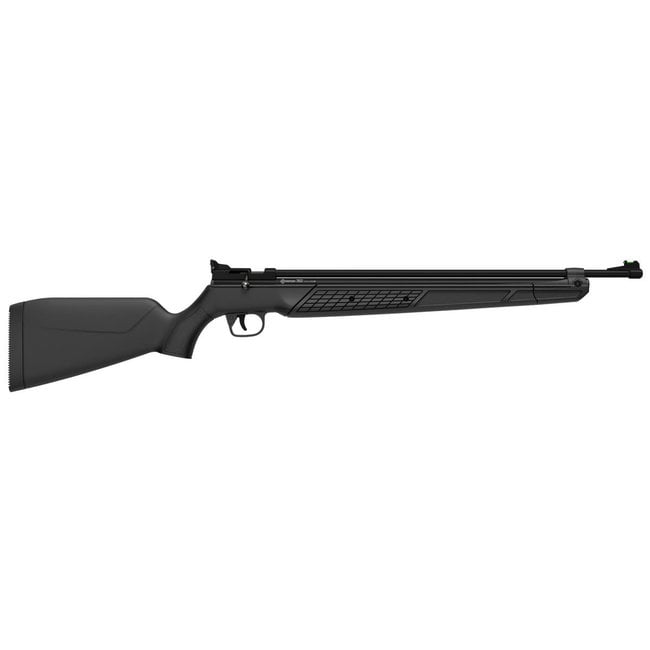
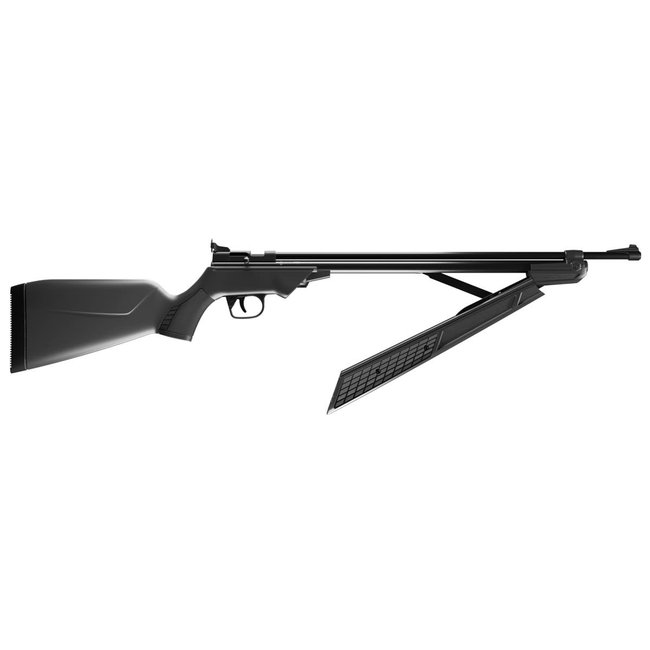
How Pumping Creates Variable Power
Here's what happens with each pump stroke:
First Pump: Establishing Base Pressure
Your first pump stroke compresses atmospheric air (14.7 PSI at sea level) into the reservoir. Assuming a well-designed system with minimal internal volume, this first pump might increase reservoir pressure to 50-75 PSI—enough to propel a pellet, but at very low velocity (typically 200-350 fps depending on caliber).
At this power level, the rifle produces minimal noise, almost no recoil, and delivers energy suitable only for very short-range target practice or pest deterrence rather than ethical killing power.
Pumps 2-5: Building Moderate Power
Each subsequent pump adds more compressed air to the reservoir, progressively increasing pressure. The relationship isn't perfectly linear—early pumps add more pressure than later pumps due to increasing resistance—but each pump still contributes meaningful energy.
By pump 3-5, most multi-pump rifles reach 200-400 PSI and deliver velocities in the 400-600 fps range. This moderate power level works excellently for:
- Indoor shooting at 5-10 meters
- Teaching new shooters with manageable recoil and report
- Recreational plinking at close range
- Situations where over-penetration is a concern
Pumps 6-8: Approaching Maximum Power
As you continue pumping, resistance increases noticeably. You're compressing air that's already under pressure, requiring progressively more effort. However, these middle-range pumps still add substantial velocity.
At 6-8 pumps, rifles typically achieve 500-700 PSI and 600-750 fps, depending on caliber and design. This power level provides:
- Adequate energy for 15-25 meter target shooting
- Sufficient power for pest control on smaller targets
- Noticeable but manageable report and recoil
- Good balance between power and effort
Pumps 9-10: Maximum Pressure
Most multi-pump rifles reach their maximum rated pump count at 8-10 strokes. Beyond this point, either the rifle reaches its design pressure limit, or pumping becomes so difficult that additional pumps provide minimal velocity gain.
At maximum pumps, reservoir pressure typically reaches 800-1,000 PSI, delivering:
- Velocities: 750-900+ fps depending on caliber and pellet weight
- Energy: 10-15 foot-pounds (sufficient for small game hunting within appropriate ranges)
- Report: Moderate crack comparable to a .22 rimfire subsonic round
- Accuracy: Maximum velocity often delivers best accuracy due to stable ballistics
The Physics of Diminishing Returns
Why do later pumps add less velocity than early pumps? The physics reveals interesting principles:
Pressure vs. Volume Relationship
When you compress air, you're doing work against increasing resistance. The first pump compresses atmospheric pressure air, which is relatively easy. The tenth pump compresses air already at 700-800 PSI, requiring significantly more force.
Boyle's Law (P₁V₁ = P₂V₂) describes this relationship. As volume decreases (compression), pressure increases proportionally. However, because you're pumping into a fixed-volume reservoir that already contains compressed air, each pump stroke represents a smaller percentage of total volume, thus creating smaller pressure increases.
Practical Implications
This diminishing return means:
- Pumps 1-3: Add approximately 50-100 fps each
- Pumps 4-6: Add approximately 30-60 fps each
- Pumps 7-8: Add approximately 20-40 fps each
- Pumps 9-10: Add approximately 10-25 fps each
Understanding this helps you make smart decisions about effort vs. benefit. If you need only moderate power, stopping at 5-6 pumps saves significant effort while delivering 80-85% of maximum velocity.
Optimizing Variable Power for Different Situations
The beauty of multi-pump rifles lies in matching power to purpose:
Low Power (2-4 Pumps): Indoor and Close-Range Shooting
Ideal for:
- Indoor shooting galleries and basement ranges
- Teaching new or young shooters
- Close-range paper target practice (5-10 meters)
- Situations requiring minimal noise
- When practicing trigger control and fundamentals
Advantages:
- Almost silent operation
- Zero recoil allowing focus on technique
- Minimal backstop requirements
- Extremely safe for controlled environments
- Very economical pellet usage (pellets rarely deform)
Velocity range: 300-500 fps Energy: 1-4 foot-pounds
Moderate Power (5-7 Pumps): Versatile Plinking and Practice
Ideal for:
- Backyard target shooting
- Reactive target engagement (spinners, knock-downs)
- General recreational shooting
- Practice at 15-25 meters
- Balancing power with ease of use
Advantages:
- Good compromise between power and effort
- Adequate for most recreational activities
- Manageable report for residential areas
- Quick follow-up shots (less pumping fatigue)
- Sufficient accuracy for casual shooting
Velocity range: 550-700 fps Energy: 5-9 foot-pounds
Maximum Power (8-10 Pumps): Hunting and Pest Control
Ideal for:
- Small game hunting (squirrels, rabbits within 20-30 meters)
- Pest control requiring ethical kills
- Long-range target shooting (30-50 meters)
- Situations demanding maximum accuracy and energy
- When each shot must count
Advantages:
- Adequate energy for ethical small game harvests
- Flattest trajectory for easier shot placement
- Maximum penetration and impact
- Best accuracy potential (most rifles group tightest at max power)
- Demonstrated capability at maximum design specification
Velocity range: 750-900+ fps Energy: 10-15+ foot-pounds
Factors Affecting Variable Power Performance
Several variables influence how effectively your multi-pump rifle converts pumps into velocity:
Pellet Weight
Heavier pellets require more energy to accelerate, resulting in lower velocities but higher energy transfer at the target. With a multi-pump rifle:
- Lightweight pellets (7-8 grains in .177, 12-13 grains in .22): Achieve maximum advertised velocities but carry less energy and are more affected by wind
- Medium pellets (8-9 grains in .177, 14-15 grains in .22): Provide good balance of velocity and energy for general use
- Heavy pellets (10+ grains in .177, 16+ grains in .22): Deliver maximum energy and better wind resistance but at significantly lower velocities
The same rifle at 10 pumps might achieve 850 fps with lightweight pellets but only 700 fps with heavy hunting pellets—yet the heavy pellets carry more foot-pounds of energy to the target.
Ambient Temperature
Temperature affects air density and thus the mass of air compressed with each pump. In cold weather (below 10°C), you compress denser air, potentially gaining 2-5% velocity. In hot weather (above 30°C), thinner air reduces velocity slightly.
This effect is much less dramatic than with CO2 rifles (which lose significant power in cold) but represents a measurable factor for precision shooting.
Seal Condition
The pump cup (leather or synthetic seal on the pump rod) and various O-rings throughout the system must seal perfectly to maintain pressure. Worn seals allow air leakage, requiring more pumps to achieve the same velocity.
Signs of seal wear:
- Requiring more pumps than normal for expected velocity
- Difficulty building pressure
- Hissing sounds during pumping
- Gradual velocity decrease over shooting sessions
Fortunately, pump cups and O-rings cost just $5-20 and can be replaced easily, restoring full performance.
Barrel Length
Longer barrels allow compressed air more time to accelerate the pellet, typically producing 20-50 fps more velocity than shorter barrels from the same pressure. However, excessively long barrels create diminishing returns and add weight.
Most multi-pump rifles use 18-22 inch barrels—an optimal compromise between velocity, portability, and balance.
Valve Design
The firing valve's efficiency dramatically affects how much stored air energy converts to pellet velocity. Well-designed valves open quickly, maintain adequate airflow, and close at the optimal moment to use air effectively without waste.
Higher-quality multi-pump rifles feature carefully engineered valves that extract maximum performance from each pump stroke.
Maintenance for Optimal Variable Power
Maintaining variable power performance requires attention to specific components:
Pump System Maintenance
Every 500 shots:
- Apply 1-2 drops of air tool oil (or chamber oil) into the pump inlet
- Work the pump mechanism several times to distribute oil
- Wipe excess oil from exterior surfaces
Annually:
- Inspect pump cup for wear, cracking, or hardening
- Check O-rings for deterioration
- Clean and lubricate pump linkage pivot points
- Verify inlet and transfer valves seat properly
Valve System Maintenance
As needed:
- If velocity decreases unexpectedly, valve seals may need replacement
- Professional servicing typically costs $40-80 and restores factory performance
- Some simple valve maintenance is DIY-friendly; consult your rifle's manual
Storage Practices
Proper storage extends multi-pump life:
- Store with one pump of air in the system (creates positive pressure that keeps seals expanded)
- Avoid storing completely empty (seals can dry and shrink)
- Store in moderate temperatures (avoid extreme heat or cold)
- Keep mechanism clean and free from debris
Comparing Multi-Pump Variable Power to Other Systems
Understanding how multi-pump variable power compares to other airgun types helps you choose wisely:
Multi-Pump vs. Spring/Gas Piston (Fixed Power)
Multi-Pump Advantages:
- Adjustable power for different situations
- No recoil or vibration affecting accuracy
- Silent at low pump counts
- No scope-damaging recoil impulses
Spring/Gas Piston Advantages:
- Faster shooting (cock and fire, no pumping)
- Generally more powerful
- Simpler mechanism with fewer moving parts
Multi-Pump vs. PCP (High-Pressure Pneumatic)
Multi-Pump Advantages:
- No external air source required
- Zero operating costs
- Completely self-contained
- No high-pressure concerns
PCP Advantages:
- Much higher power potential
- Multiple shots per fill
- Faster shooting cadence
- Better suited for serious hunting and competition
Multi-Pump vs. CO2 (Fixed Pressure)
Multi-Pump Advantages:
- No consumable costs
- Temperature stable performance
- Adjustable power
- Unlimited shots (just pump more)
CO2 Advantages:
- Faster shooting
- Consistent power per cartridge (until depletion)
- Very simple operation
For budget-conscious shooters who want versatility, temperature stability, and zero operating costs, multi-pumps offer compelling advantages over alternatives.
Advanced Techniques: Maximizing Multi-Pump Performance
Experienced multi-pump shooters employ several techniques to optimize performance:
Consistent Pumping
For maximum accuracy, pump with consistent rhythm and effort:
- Pull forearm fully forward on each stroke
- Use smooth, controlled movements (not jerky pumps)
- Count strokes audibly to ensure accuracy
- Allow brief pause between pumps for air to settle
Shot Pacing
Unlike PCPs with shot strings from one fill, multi-pumps require pumping before each shot. Smart pacing involves:
- Pumping all competition shots to identical pump counts
- Waiting 5-10 seconds after final pump before firing (allows valve pressure to stabilize)
- Maintaining consistent shooting cadence for best accuracy
Pellet Selection for Purpose
Match pellet weight to pump count and purpose:
- Low pump counts + lightweight pellets = velocity without effort
- Maximum pumps + heavy pellets = maximum energy transfer
- Experiment to find your rifle's accuracy sweet spot
Shop Multi-Pump Rifles at Airgun Source Canada
Ready to experience the versatility of variable power? Browse our completemulti-pump rifle collection featuring legendary models from Crosman, Daisy, and Benjamin. Whether you're introducing a young shooter to the sport, seeking an economical plinker, or want a reliable small game rifle, our selection includes the perfect multi-pump for your needs.
With over 20 years serving Canadian airgunners, we understand the unique advantages multi-pump rifles offer. Our team can help you select the ideal model and caliber for your intended use, ensuring you get a rifle that delivers adjustable power, zero operating costs, and decades of reliable service.
Questions about multi-pump rifles or variable power systems? Call our airgun specialists at 1-800-565-9527 or email [email protected] for expert guidance.
Conclusion: Power on Your Terms
Multi-pump air rifles put complete control in your hands—literally. By understanding how each pump stroke adds compressed air to the reservoir, how pressure converts to velocity, and how to match power levels to shooting situations, you maximize these versatile rifles' potential.
The beauty of variable power lies in adaptability. One rifle serves as a quiet indoor plinker, a backyard target rifle, and a capable small game hunter—simply by adjusting how many times you pump. Combined with zero operating costs, temperature-stable performance, and legendary reliability, multi-pump rifles represent some of the smartest investments in airgun shooting.
Experience the freedom of variable power. Explore ourmulti-pump rifle collection and discover why these classic designs remain bestsellers after generations of proven performance.


