
CO2 for Defense Launchers: 12g Cartridges vs Bulk Fill in Canada
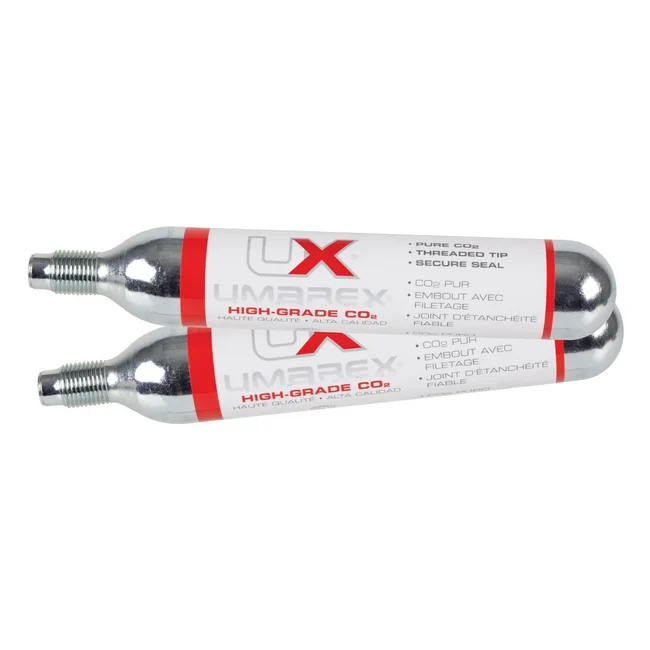
For most defense launchers, a 12g CO2 cartridge is the standard fill — convenient and inexpensive — while 88g and 90g cylinders suit higher-capacity carbines that benefit from more shots between changes. A 12g cartridge typically powers a short session in a pistol; a bulk cylinder delivers many times that. The right choice depends on your launcher, how much you shoot, and the Canadian cold, which cuts CO2 output. You can stock both in our CO2 cylinders collection, and this guide explains which system fits your launcher.
How many shots do you get from a 12g CO2 cartridge?
A single 12g CO2 cartridge generally yields enough gas for a short session — on the order of dozens of shots in a typical pistol — though the exact count drops with calibre, power, and cold. A .43 launcher sips less gas per shot than a .68, so it gets more shots per cartridge; firing rapidly or in cold conditions reduces the usable total. Treat the cartridge as a per-session consumable rather than something that lasts for weeks of shooting.
If you want maximum shots between changes, that is the case for stepping up to an 88g or 90g cylinder on a launcher that accepts one. For the techniques that stretch each fill further, our guide on maximizing shots per cartridge goes deeper than we can here.
12g cartridges vs 88g/90g cylinders: which is right for your launcher?
Match the CO2 format to the launcher: 12g cartridges for most pistols and compact defense launchers, 88g/90g cylinders for carbines and anything you shoot in volume. The trade-off is convenience versus shots-per-fill. A 12g is cheap, universal, and easy to carry; a bulk cylinder means fewer interruptions and a lower cost per shot when you train heavily. The comparison below lays out the in-stock options.
| CO2 system | Capacity | Typical use | In-stock examples | Price (CAD) | Notes |
|---|---|---|---|---|---|
| 12g cartridge | 12 g | Most P2P/T4E pistols and compact launchers | Sig Sauer 12g (15/40 ct); Umarex 12g (12/30 ct) | $13.43–42.99 per pack | One per fill; convenient; output drops in cold |
| 88g / 90g cylinder | 88–90 g | Carbines and higher-capacity launchers | Sig Sauer 90g 2-pack; Umarex 88g 2-pack | $27.39–29.13 per 2-pack | Far more shots per fill; fewer changes |
| Adapter | — | Run a 12g in an 88g platform, or bridge formats | Single 12g-to-88g Adapter (Sig MPX/MCX); Umarex 88g Adapter | $41.99–72.32 | Adds flexibility between formats |
A useful rule from the counter: if you mostly keep a launcher for occasional defensive checks and light practice, 12g cartridges are the simplest path. If you shoot enough that swapping cartridges becomes a chore, the bulk cylinder pays for itself in convenience.
Are all 12g CO2 cartridges the same?
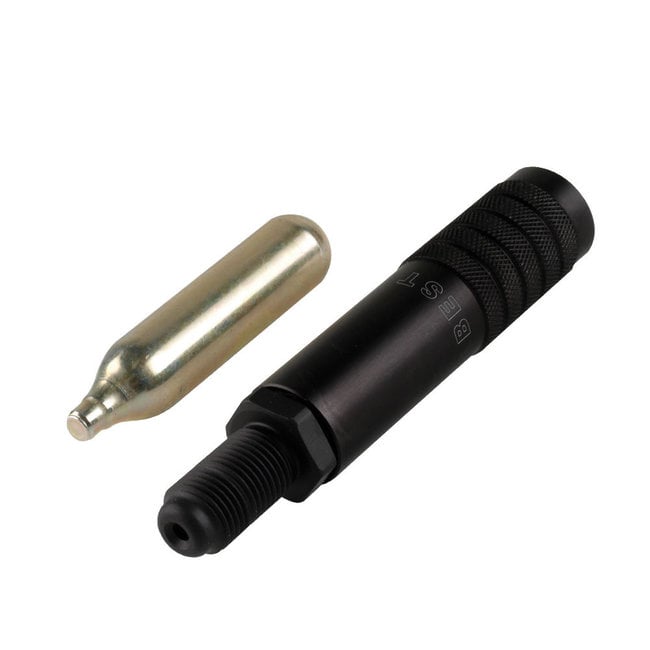
Dimensionally, yes — 12g cartridges are a standard size and interchange across cartridge launchers — but they are not identical, because some include lubricating oil and some do not. Oiled cartridges are designed to keep the seals in BB and pellet guns conditioned. In a marker or less-lethal launcher, that oil can be unnecessary or even work against you, contributing to fouling over time.
For a defense launcher, a clean, non-oiled cartridge is generally the safer default, and you should follow your launcher manufacturer's guidance on lubrication. We carry standard 12g cartridges suited to these platforms; if you are unsure which is right for your specific launcher, the calibre and platform context in our T4E calibre guide is a helpful starting point, and you can compare formats in the CO2 cylinders collection.
How does cold weather affect CO2 performance?
Cold weather lowers CO2 pressure, which reduces both velocity and the number of usable shots per cartridge — a real consideration for Canadian shooters. CO2 relies on the gas expanding from a liquid reserve; when the cartridge is cold, less gas is available per shot, so power sags and shot count falls. The colder it gets, the more pronounced the drop. This is the single biggest reason a launcher that feels strong in summer can feel weak on a winter range.
The behaviour comparison below summarises how the two formats hold up, and our dedicated guide on how weather affects CO2 performance covers the workarounds in detail — chiefly keeping cartridges warm until use and allowing recovery time between shots in the cold.
| Factor | 12g cartridge | 88g / 90g cylinder |
|---|---|---|
| Shots per unit | Lower — one short session | Higher — multiple sessions |
| Cold-weather output | More noticeable drop-off | More stable; larger gas reserve |
| Convenience | Drop-in, widely available | Fewer changes, bulkier |
| Cost over time | Higher per shot | Lower per shot at volume |
| Best for | Pistols, occasional defense use | Carbines, high-round training |
How long does a 12g cartridge last once pierced, and can you refill it?
Once you pierce a 12g cartridge, plan to use its gas the same session — a pierced cartridge slowly vents and will not hold a full charge for storage — and standard disposable 12g cartridges are not designed to be refilled. Some launchers seal a pierced cartridge well enough to finish later, but the reliable practice is to shoot it out rather than store a partially used one. Leaving a pierced cartridge in a launcher long-term can also stress seals.
Refillable 12g cartridges and bulk-fill systems exist for hobbyists, but for a defense launcher the simpler, more dependable route is fresh disposable cartridges or a bulk 88g/90g cylinder. Keep a small supply so you are never caught with a half-spent cartridge when you want the launcher ready.
What is the real cost per shot of CO2?
In multipacks, 12g cartridges land around $1.00 to $1.16 each, so your CO2 cost per shot is small but real and rises in the cold as each cartridge yields fewer shots. Buying cartridges in larger counts lowers the per-cartridge price; a 90g or 88g cylinder lowers the effective cost further if your launcher uses one, because a single cylinder covers far more shots than the equivalent number of 12g cartridges.
Factor CO2 into your overall running cost alongside ammo. If you train in volume, the savings from bulk CO2 mirror the savings from buying training rounds in bulk — both reward shooting more for less. Pair your CO2 plan with the right rounds from our self-defense ammo collection, and make sure the launcher itself suits how you shoot, whether that is a defense pistol or a defensive carbine.
Frequently asked questions about CO2 for defense launchers
How many shots can I expect from a 12g CO2 cartridge?
Expect on the order of dozens of shots in a typical pistol from one 12g cartridge, with the exact number falling for larger calibres, rapid fire, and cold weather. A .43 launcher gets more shots per cartridge than a .68. For maximum shots between changes, an 88g or 90g cylinder is the better format.
Are all 12g CO2 cartridges the same?
They share a standard size and interchange across cartridge launchers, but some contain lubricating oil and some do not. Oiled cartridges suit BB and pellet guns; for a marker or less-lethal launcher a clean, non-oiled cartridge is usually the safer default. Follow your launcher manufacturer's lubrication guidance.
Why does my launcher lose power in the cold?
CO2 depends on gas expanding from a liquid reserve, and cold lowers the available pressure, so velocity and shot count drop. In a Canadian winter this is very noticeable. Keep cartridges warm until use, allow recovery time between shots, or use a larger cylinder with more reserve.
Can you refill a 12g CO2 cartridge?
Standard disposable 12g cartridges are not designed to be refilled, and once pierced a cartridge slowly vents and will not store a full charge. Refillable cartridges and bulk-fill systems exist for enthusiasts, but fresh disposables or a bulk 88g/90g cylinder are the dependable choice for a defense launcher.
Where to start?
Choose your CO2 format by launcher and shooting volume: 12g cartridges for a pistol you use occasionally, a bulk 88g/90g cylinder if you train heavily, and always a few spares for the cold. Keep CO2 stocked the same way you keep ammo stocked, so the launcher is ready when you want it.
To shop online, start with these collections:
- CO2 cylinders — 12g cartridges, 88g/90g bulk cylinders, and adapters.
- Self-defense ammo collection — the rounds your launcher will be firing.
- Self-defense pistols — CO2-powered launchers.
- Self-defense rifles — carbine-format launchers for higher capacity.
- Self-defense and training category — complete your setup.
If you are dialling in a new launcher, buy a multipack of standard 12g cartridges, fire a cartridge or two to confirm consistent velocity, and note how the count changes in cold conditions before you rely on it. For platform context, our comparison of P2P vs T4E home defense launchers and our Umarex T4E buyer's guide are both good next reads.


