
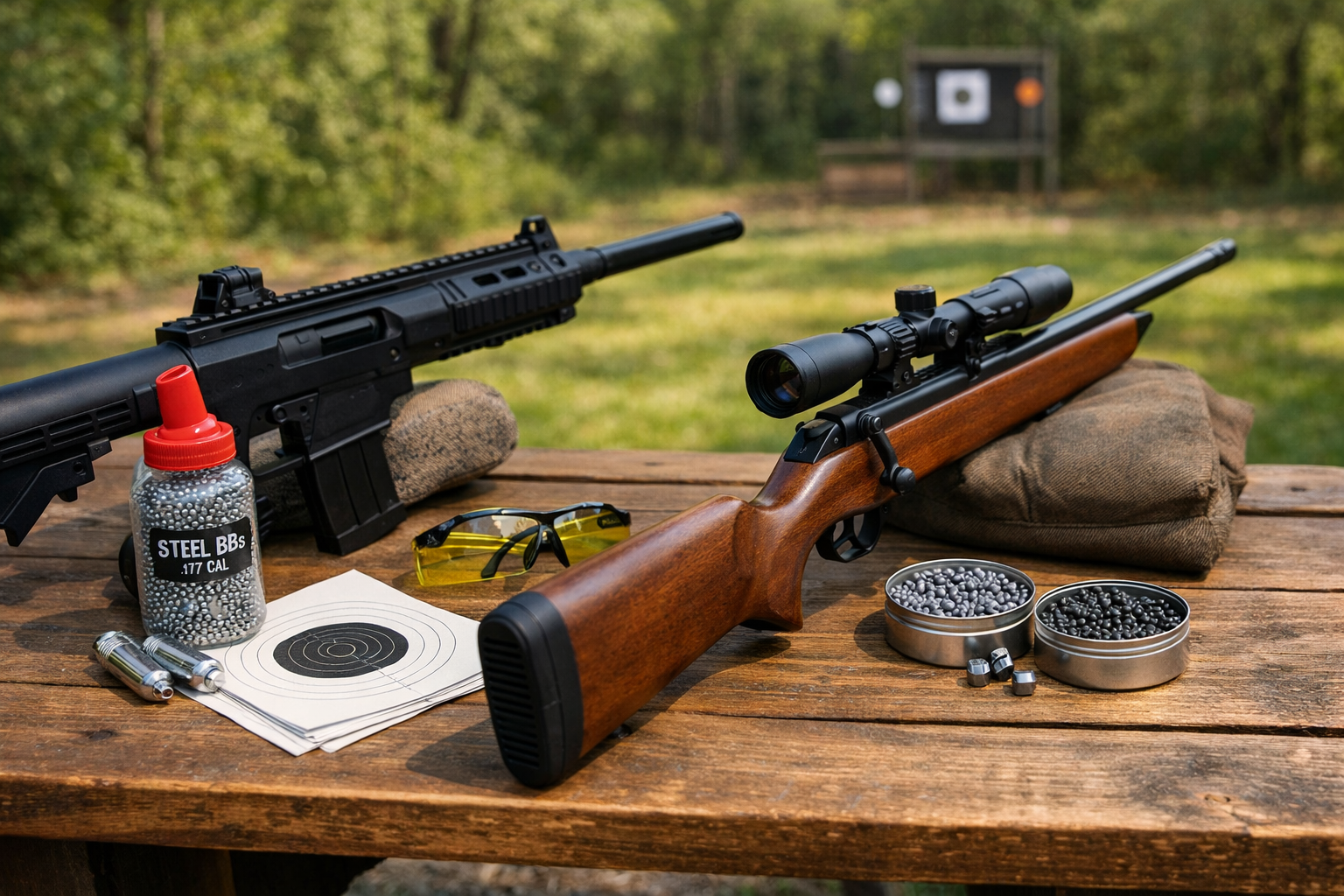
BB vs Pellet Rifles Under 500fps: Practical Differences for Canadian Beginners
If you’re shopping for a first air rifle Canada style—especially something under 500fps Canada—you’ll quickly run into two common choices: BB rifles and pellet rifles. Both can be excellent for backyard plinking and learning the basics, and many models are marketed as license-free air rifles Canada. But they behave differently in the real world.
This guide focuses on what beginners actually notice: accuracy, ease of use, maintenance, safety, and what you can realistically do with each platform at sub-500 fps. It’s not about hype—it’s about picking a setup you’ll enjoy, practice with, and use responsibly.
First, what does “under 500fps” mean in Canada?
In Canada, airguns that are below key velocity/energy thresholds are commonly sold as “no license required.” Retailers often group these as under 500fps Canada products. That classification is why so many entry-level BB and pellet rifles are tuned to be compliant out of the box.
Two important beginner notes:
- It’s still a serious tool. Even at sub-500 fps, an air rifle can injure and damage property. Treat it with the same respect as any firearm: safe direction, finger off trigger, and know your target and what’s beyond.
- Local rules still matter. Municipal bylaws and discharge restrictions can apply even when an airgun is license-free. Always confirm what’s legal where you live.
If you’re browsing options, it helps to start with a curated list ofUnder 500fps - NO LICENSE REQUIRED models and then narrow down by ammo type.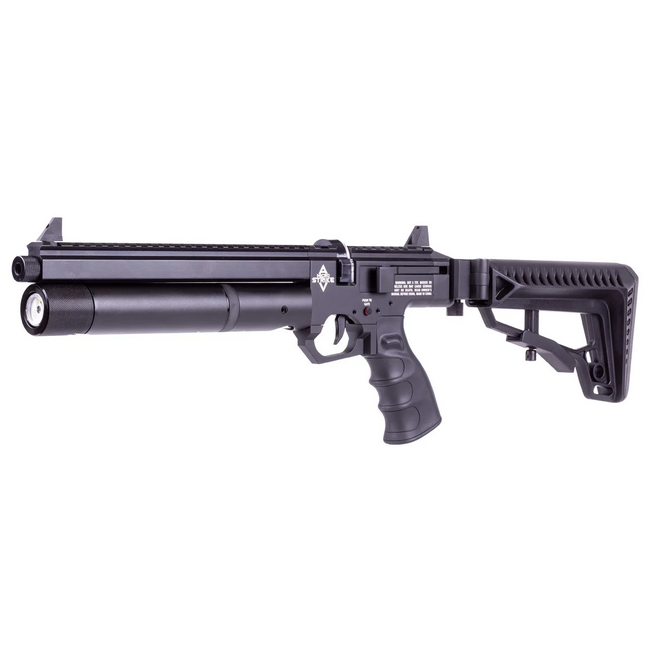
BB vs pellet air rifles: the quick definition
At a glance, the main difference is the projectile:
- BB rifles typically fire .177 steel BBs (round balls). Many use magazines and can shoot quickly, sometimes semi-auto or even full-auto (where permitted by design).
- Pellet rifles fire lead or lead-free pellets with a “diabolo” shape (a narrow waist and flared skirt). They’re designed for stability and precision.
This one detail drives most of the practical differences you’ll feel at the range.
Accuracy: why pellets usually win (especially for beginners)
If you’ve been searching pellet vs BB accuracy, here’s the practical reality: pellets are usually more accurate and more forgiving at typical backyard distances.
Why pellet rifles tend to group tighter
- Pellet shape stabilizes in flight. The skirt and waist help the pellet self-stabilize, which generally means better consistency.
- Barrels are optimized for pellets. Pellet rifles use rifled barrels intended to spin-stabilize the pellet.
- Better fit and seal. A properly sized pellet can seal the bore more consistently than a steel BB, which is typically slightly undersized for safety and feeding reliability.
Where BB rifles can struggle
- BBs are round. Round projectiles don’t stabilize like diabolo pellets at these speeds.
- Steel-on-steel behavior. In many BB designs, BBs travel through smoothbore barrels and can be more sensitive to minor inconsistencies.
- Ricochet risk affects practice setup. Because BBs bounce more, beginners sometimes use “softer” traps or improvised backstops that aren’t ideal, which can disrupt consistent practice.
Bottom line: if your goal is to learn fundamentals like sight picture, trigger control, and consistent groups, pellet rifles are usually the easier path. If your goal is fast, casual plinking with lots of shots per session, BB rifles can still be a great time.
Range and real use cases under 500 fps
Sub-500 fps air rifles are commonly used for:
- Backyard target shooting (where lawful)
- Paper targets and reactive targets (with safe backstops)
- Basic marksmanship training
In that context:
- Pellet rifles tend to stay enjoyable as you stretch distance, because accuracy remains usable for longer.
- BB rifles shine at short-range fun, rapid fire, and lower cost per shot, but typically run out of precision sooner as distance increases.
For most beginners, a realistic starting distance is 5 to 10 meters indoors (where safe and permitted) or 10 to 20 meters outdoors with a proper backstop. Pellets generally make it easier to see progress as you push further.
Cost to shoot: BBs are cheap, but pellets aren’t expensive either
Budget matters for a beginner air rifle choice because the most important thing you can buy is practice time.
- BBs are often cheaper per shot and sold in large quantities. That makes them great for high-volume plinking sessions.
- Pellets cost a bit more, but the difference is usually small enough that it’s worth it if you value accuracy and cleaner target results.
Also consider the “hidden” consumables:
- CO2 cartridges (common in BB rifles and some pellet rifles) add ongoing cost, and performance can vary in cold weather.
- Targets and traps may cost more for BB use because you need stronger, more ricochet-resistant containment.
For ammo and CO2 in one place, seeAmmunition & CO2.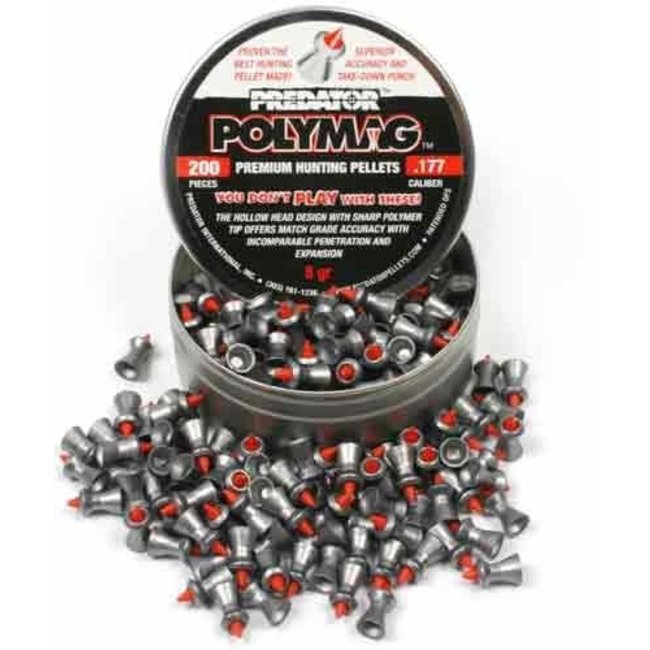
Safety and backstops: BBs demand more caution
Both types require eye protection and a proper backstop. But the projectile material changes the risk profile.
BB ricochets are the big difference
- Steel BBs bounce. They can ricochet off hard backstops, metal target traps, rocks, and even dense wood.
- They can travel unpredictably after impact. This is a major reason experienced shooters are stricter about BB backstop setup.
Pellets are generally easier to contain
- Lead pellets deform. They flatten and shed energy when they hit, reducing (not eliminating) ricochet risk.
- Pellet traps are widely available. Many standard traps handle pellets well when used at appropriate distances.
Practical beginner advice: if you’re setting up in a limited space, or you want the simplest safe range setup, pellets usually make life easier.
Powerplants and “feel”: spring vs CO2 vs electric
When comparing BB vs pellet air rifles under 500 fps, the power system often matters as much as the ammo.
Spring/piston (common for pellet rifles)
- Pros: no CO2 to buy, consistent cost per shot, good for fundamentals.
- Cons: recoil-like “spring bump” can make accuracy harder until you learn the hold; cocking effort can be higher.
CO2 (very common for BB rifles, also found in pellet rifles)
- Pros: easy to shoot, often magazine-fed, low cocking effort, great for casual plinking.
- Cons: performance drops in cold temperatures; ongoing cartridge cost; rapid firing can cool the cartridge and reduce velocity.
Electric (less common, but popular in replica-style BB rifles)
- Pros: very high fun factor, fast shooting, minimal effort per shot.
- Cons: batteries/charging, more moving parts, not typically chosen for precision training.
A real example of the “fun-first” BB category is theAER16 Electric .177 Cal BB Rifle, which is built around fast, easy shooting rather than slow-fire precision.
Maintenance and longevity: pellets are usually gentler on the barrel
For beginners, maintenance should be simple and predictable.
- Pellet rifles (especially spring/piston) often require minimal routine maintenance beyond basic cleaning and proper storage. Pellets are softer than steel, and rifled bores are designed around them.
- BB rifles can be very reliable, but steel BBs are harder on surfaces over time, and many designs rely on magazines and feeding systems that benefit from keeping ammo clean and dry.
Also consider where you shoot:
- If you’ll shoot in colder months, CO2 platforms can be less consistent.
- If you want something that works the same session after session without consumables, spring/piston pellet rifles are appealing.
Noise: neither is “silent,” but some are more neighbour-friendly
Under 500 fps does not automatically mean quiet. Noise depends on action type and the “crack” of the mechanism.
- Spring/piston pellet rifles often have a distinct mechanical thump. Some are reasonably quiet outdoors, but they’re not silent.
- CO2 BB rifles can be surprisingly sharp-sounding, especially with rapid fire.
If you’re in a suburban setting, focus less on the ammo type and more on the specific model’s action and how/where you’ll shoot. A safe backstop and respectful shooting hours matter as much as raw decibels.
Choosing by goal: which one fits your “beginner air rifle choice”?
Instead of asking which is “better,” match the platform to what you’ll actually do.
Choose a pellet rifle if you want:
- Better accuracy and tighter groups at typical backyard distances
- A clearer path to improving fundamentals (breathing, trigger control, follow-through)
- Easier backstop management with fewer ricochets
- A classic training approach (single-shot or slower cadence)
A well-known example of a training-focused pellet rifle is theAvanti 753S, which is often associated with learning marksmanship basics.
Choose a BB rifle if you want:
- High-volume plinking with lower ammo cost
- Magazine-fed convenience and faster shooting
- Replica styling and a “range day” feel without complex setup
For browsing, these collections help you compare similar models side-by-side:BB Rifles andPellet Rifles.
Common beginner misconceptions (and what to do instead)
“Under 500 fps means it’s a toy.”
It isn’t. Use proper eye protection, control your shooting direction, and choose a backstop that can safely stop the projectile every time.
“BB guns are always less accurate, so they’re pointless.”
Not true. BB rifles can be very enjoyable for short-range practice and fast shooting. The key is setting realistic expectations and using an appropriate backstop to manage ricochets.
“Any pellet will work in any pellet rifle.”
Pellet fit and design matter. Many rifles show clear preferences for certain pellet weights and shapes. If your groups are inconsistent, try a couple pellet types before blaming the rifle.
Practical starter setups (simple, safe, and realistic)
Here are two beginner-friendly approaches that keep the learning curve manageable:
Setup A: “Accuracy first”
- Under-500 fps pellet rifle
- Paper targets at 10 meters
- A purpose-built pellet trap or properly rated backstop
- One or two pellet types to test for best grouping
Setup B: “Plinking and fun”
- Under-500 fps BB rifle with a reliable magazine system
- Sturdy BB-rated trap/backstop designed to reduce ricochets
- Eye protection for everyone present
- Plan for CO2 (if applicable) and understand cold-weather performance
The takeaway: pick the platform that matches your kind of practice
For most Canadians choosing a first air rifle Canada under the license-free category, the decision comes down to what you want your sessions to feel like.
- If you want measurable progress and the best chance at tight groups, pellet rifles usually lead the conversation on pellet vs BB accuracy.
- If you want quick, casual shooting with lots of trigger time, BB rifles deliver a lot of fun per dollar—just take ricochets and backstops seriously.
Whichever direction you choose, staying within theunder-500 fps category is a straightforward way for beginners to start responsibly in Canada—while you build skills and learn what style of shooting you enjoy most.


