
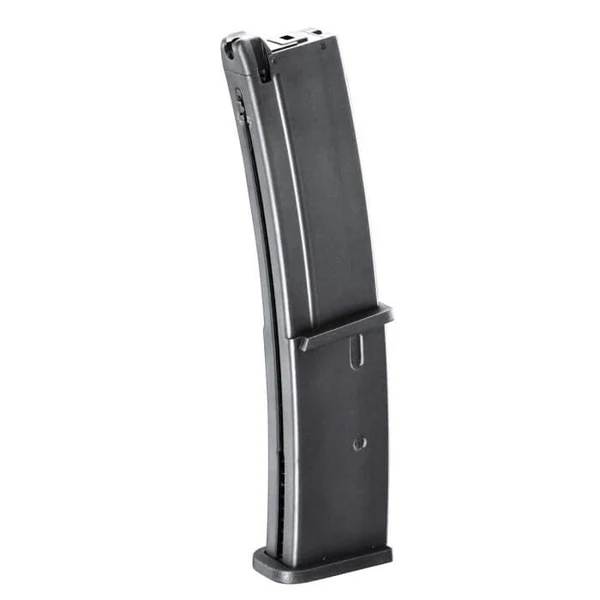
6mm Airsoft Rifle Magazine Types: Hi-Cap vs Mid-Cap vs Low-Cap
When you're gearing up for your next airsoft game, your rifle gets most of the attention. You research fps ratings, gearbox versions, and build quality—but what about magazines? The type of magazine you choose profoundly impacts your playing experience, affecting everything from reload frequency and tactical realism to noise discipline and gear weight.
Walk into any airsoft field and you'll see players running vastly different magazine setups. Some carry a single 450-round hi-cap magazine and never reload all day. Others run six 120-round mid-caps on chest rigs, conducting frequent tactical reloads. Still others embrace ultra-realism with 30-round real-cap magazines, counting every shot like their lives depend on it.
Understanding the differences between high-capacity (hi-cap), mid-capacity (mid-cap), and low-capacity (real-cap) magazines helps you make informed decisions that align with your playing style, budget, and tactical preferences. This comprehensive guide explores each magazine type in detail, examining their mechanisms, advantages, disadvantages, and ideal applications for Canadian airsoft players.
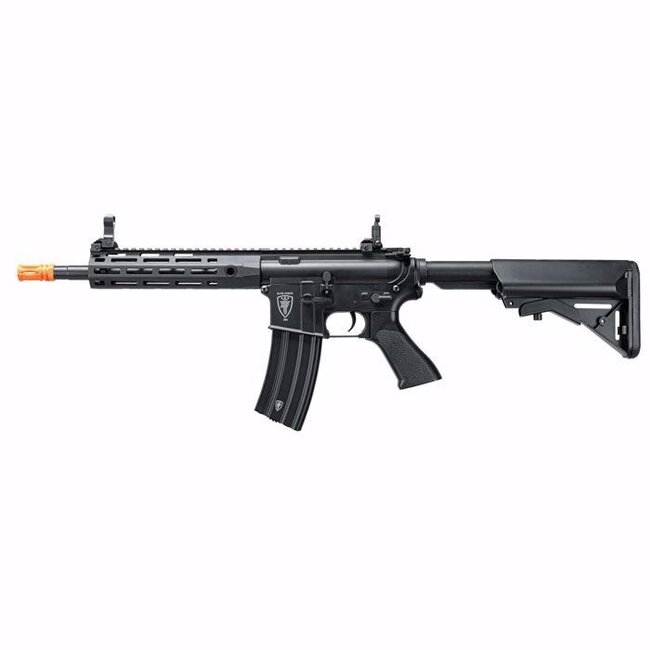
Understanding Airsoft Magazine Mechanics
Before comparing specific magazine types, let's understand how airsoft magazines function differently from real firearm magazines.
Real steel magazines are simple spring-loaded devices: a spring pushes cartridges upward, and the bolt strips each round during cycling. Airsoft magazines face a more complex challenge—they must reliably feed lightweight, spherical 6mm BBs to an AEG's (Automatic Electric Gun) loading nozzle that cycles dozens of times per second.
All airsoft magazines share common elements:
BB Reservoir: Where BBs are stored, varying dramatically in capacity between magazine types.
Feed Mechanism: The system that presents BBs to the rifle's loading nozzle.
Feed Lips: The interface where BBs transfer from magazine to rifle.
Magazine Spring/Winding Mechanism: Provides tension to feed BBs upward.
Body Construction: Usually polymer or metal, depending on quality and realism goals.
The key difference between magazine types lies primarily in capacity and feed mechanism design.
High-Capacity (Hi-Cap) Magazines: Maximum Firepower
High-capacity magazines represent the highest BB capacity option, typically holding 300-600 rounds depending on the rifle platform. M4 hi-caps usually hold 300-450 rounds, while AK hi-caps can exceed 600 rounds.
How Hi-Cap Magazines Work
Hi-cap magazines use a wind-up mechanism fundamentally different from real magazine springs. Inside a hi-cap magazine, you'll find:
BB Reservoir: A large chamber where loose BBs are stored after loading through a trap door on top.
Winding Wheel: Located at the bottom of the magazine, this wheel tensions an internal spring mechanism.
Spring-Driven Feed Channel: Winds BBs from the reservoir into a channel leading to the feed lips.
Continuous Tension System: Maintains pressure throughout the capacity range.
To use a hi-cap magazine:
- Load BBs through the top trap door (often requiring 500+ BBs)
- Wind the wheel on the magazine bottom 30-50 times to tension the spring
- As you shoot, periodically wind the magazine to maintain feeding pressure
- When BBs loosen in the reservoir, you'll hear rattling
This winding mechanism allows hi-caps to hold far more BBs than a standard magazine spring could reliably feed.
Hi-Cap Advantages
Maximum Capacity: The most obvious benefit—300 to 600+ rounds means extended gameplay without reloading. For suppressive fire roles or sustained engagements, this capacity is invaluable.
Cost-Effective: Hi-caps offer the lowest cost per round carried. Instead of buying six mid-cap magazines at $15-25 each, you might buy two hi-caps for $20-30 total and carry similar BB counts.
Beginner-Friendly: New players can focus on gameplay rather than magazine management. Not worrying about reload frequency lets beginners concentrate on movement, communication, and tactics.
Sustained Fire Capability: Support gunners and base-of-fire players benefit from continuous fire capability without frequent reloads.
Simple Logistics: Carrying one or two magazines instead of six reduces the need for magazine pouches, tactical vests, and complex gear setups.
Hi-Cap Disadvantages
Noise: The fatal flaw of hi-caps is rattling. Loose BBs shake inside the reservoir, creating noise that compromises stealth. Every movement produces a distinctive rattle that alerts opponents to your position.
Winding Requirement: You must periodically wind the magazine during gameplay. Forgetting to wind can cause feeding failures at critical moments. The winding motion also temporarily takes one hand off your rifle.
Weight When Full: A fully loaded 450-round hi-cap weighs significantly more than several mid-caps. The weight is also concentrated in one location rather than distributed across your gear.
Less Realistic: Hi-caps don't replicate real magazine behavior. For MilSim (Military Simulation) players or those seeking authentic experiences, hi-caps break immersion.
Feeding Inconsistencies: The winding mechanism can jam or fail, especially with low-quality magazines. Overwinding can also cause feeding issues.
Not MilSim Legal: Many MilSim events and serious tactical games prohibit hi-cap magazines to encourage realistic ammunition management.
Best Hi-Cap Applications
Hi-cap magazines excel in:
- Casual Gameplay: Backyard games and informal skirmishes
- Beginner Players: Those still learning basic airsoft mechanics
- Support Gunner Roles: Players providing sustained suppressive fire
- Budget-Conscious Players: Those prioritizing cost over realism
- High-ROF Builds: Rifles with extreme rates of fire that would drain mid-caps quickly
- Longer Game Formats: Extended scenarios where reloading opportunities are limited
Mid-Capacity (Mid-Cap) Magazines: The Balanced Choice
Mid-capacity magazines have become the gold standard for serious airsoft players, offering a compelling balance between capacity, realism, and practicality. Typical mid-cap capacities range from 120-190 rounds for M4 platforms and 100-150 rounds for AK platforms.
How Mid-Cap Magazines Work
Mid-cap magazines use a traditional spring-loaded mechanism similar to real firearm magazines:
Spring-Loaded Follower: A strong spring pushes a follower plate upward, maintaining constant pressure on the BB stack.
BB Column: BBs stack directly on top of each other in the magazine body.
Consistent Feed Pressure: The spring provides uniform tension throughout the magazine's capacity.
No Winding Required: Once loaded, mid-caps feed continuously until empty.
Loading mid-caps requires a speed loader—a device that uses pressure to overcome the magazine spring tension and push BBs into the magazine. Without a speed loader, loading mid-caps by hand is tedious and time-consuming.
Mid-Cap Advantages
Silent Operation: The single biggest advantage of mid-caps is silence. BBs are held tightly by spring pressure, eliminating rattle. You can move stealthily without announcing your position.
Realistic Reload Frequency: With 120-150 rounds, you'll reload several times during gameplay—similar to real firearms. This adds tactical depth and forces ammunition awareness.
Consistent Feeding: Quality mid-caps provide more reliable feeding than hi-caps. The constant spring pressure ensures consistent BB presentation to the loading nozzle.
No Winding: Once loaded, mid-caps work continuously without maintenance during gameplay. You never need to stop to wind a magazine.
MilSim Approved: Most MilSim events and tactical leagues allow mid-caps, making them the standard for serious organized play.
Forced Tactical Play: Limited capacity encourages better ammunition discipline, cover usage, and tactical movement rather than simply spraying BBs.
Quality Construction: Mid-caps are typically better made than budget hi-caps, with superior materials and tighter tolerances.
Mid-Cap Disadvantages
Higher Initial Cost: Building a magazine collection is expensive. Six quality mid-cap magazines can cost $90-150 compared to $20-40 for two hi-caps.
Requires Speed Loader: Loading mid-caps without a speed loader is impractical. You'll need to invest in a quality speed loader ($10-30) and carry it to games.
More Gear Required: Carrying 6-8 magazines requires chest rigs, magazine pouches, or tactical vests. This adds cost and complexity to your loadout.
Reload Management: You need to track magazine status and manage reloads during gameplay. Spent magazines must be stored separately from fresh ones.
Learning Curve: New players may struggle with reload frequency and magazine management while learning game mechanics.
Weight Distribution: While total weight is similar to hi-caps, carrying six magazines distributed across your gear can feel heavier than one heavy magazine in your rifle.
Best Mid-Cap Applications
Mid-cap magazines are ideal for:
- MilSim Events: Where realism and tactics are prioritized
- Serious Players: Those who've mastered basics and want deeper tactical gameplay
- Stealth-Oriented Roles: Reconnaissance, flanking, and ambush tactics
- Competitive Play: Where every advantage matters
- Outdoor Field Games: Where reload cover is available
- Team-Based Play: Organized squads with covering fire and reload opportunities
- Players Seeking Realism: Those who value authentic experiences
Low-Capacity (Real-Cap) Magazines: Maximum Realism
Low-capacity or "real-cap" magazines replicate actual firearm magazine capacities, typically holding 30-35 rounds for M4 platforms and 30-75 rounds for AK platforms (matching real AK-47 and AK-74 magazine capacities).
How Real-Cap Magazines Work
Real-caps function identically to mid-caps—spring-loaded followers maintaining pressure on tightly stacked BBs. The only difference is capacity, which matches real steel magazines for ultimate authenticity.
Real-Cap Advantages
Ultimate Realism: For players prioritizing authentic experiences, real-caps offer the most realistic magazine management possible in airsoft.
Maximum Tactical Challenge: Extremely limited capacity forces careful shot placement, ammunition conservation, and tactical discipline.
Lightweight: Individual magazines weigh less than mid-caps due to shorter springs and smaller bodies.
Competition Use: Some competitive formats require real-cap magazines to level the playing field and emphasize marksmanship.
Training Value: Real-caps develop skills directly transferable to real firearms training—ammunition awareness, reload speed, and tactical discipline.
Elite Status: In some communities, running real-caps signals serious player commitment and advanced skill.
Real-Cap Disadvantages
Extremely Limited Capacity: 30 rounds disappear quickly in sustained firefights. With typical AEG rates of fire (15-20 rounds per second on full-auto), a magazine empties in under 2 seconds of sustained fire.
Frequent Reloading: You'll reload constantly—potentially dozens of times during a single game. This requires exceptional reload speed and magazine management.
Massive Magazine Requirements: Serious play requires 10-15+ magazines to carry enough ammunition for extended scenarios.
Significant Investment: Quality real-cap magazines cost $12-20 each. Outfitting 12 magazines costs $150-250.
Gear Intensive: Carrying 12+ magazines requires substantial tactical gear—plate carriers, chest rigs with extensive magazine pouches, and potentially dump pouches.
Not Beginner-Friendly: New players struggle with basic gameplay; adding constant reload requirements creates frustration.
Limited Availability: Not all rifle platforms have quality real-cap options available.
Best Real-Cap Applications
Real-cap magazines suit:
- Hardcore MilSim: Events emphasizing maximum realism
- Training Scenarios: Firearms training where airsoft simulates real weapons
- Elite Competitions: High-skill competitions requiring perfect shot placement
- Historical Reenactments: Period-accurate loadouts for specific conflicts
- Advanced Players: Those mastering every tactical aspect
- Specific Roles: Designated marksmen who fire semi-auto and value accuracy over volume
Capacity Comparison: Numbers That Matter
Understanding actual capacity differences helps with magazine selection:
M4/AR-15 Platform Magazines
- Hi-Cap: 300-450 rounds (typical: 350-400)
- Mid-Cap: 120-190 rounds (typical: 120-150)
- Real-Cap: 30-35 rounds (standard: 30)
AK Platform Magazines
- Hi-Cap: 400-600 rounds (typical: 450-550)
- Mid-Cap: 100-150 rounds (typical: 120-130)
- Real-Cap: 30-75 rounds (AK-74: 30, AK-47: 30-75 depending on style)
Game Duration Implications
Consider how long magazines last in actual gameplay:
Semi-Auto Fire (conservative shooting, 1 shot per second):
- Hi-Cap (400 rounds): 6.6 minutes continuous fire
- Mid-Cap (130 rounds): 2.2 minutes continuous fire
- Real-Cap (30 rounds): 30 seconds continuous fire
Full-Auto Bursts (15 rounds per second, 1-second bursts):
- Hi-Cap (400 rounds): 26 bursts
- Mid-Cap (130 rounds): 8-9 bursts
- Real-Cap (30 rounds): 2 bursts
These numbers demonstrate why magazine choice profoundly affects gameplay style and tactics.
Material and Build Quality Considerations
Magazine construction quality varies significantly and impacts performance regardless of capacity type.
Polymer Magazines
Most affordable magazines use polymer construction:
Advantages: Lightweight, affordable, adequate durability for casual play, less expensive to replace
Disadvantages: Can crack if dropped on hard surfaces, feed lips may wear faster, less realistic weight and feel
Best For: Backup magazines, budget builds, casual players, reducing overall gear weight
Metal Magazines
Premium magazines feature metal construction (aluminum or steel):
Advantages: Exceptional durability, realistic weight and feel, superior longevity, better feeding reliability, often better internal components
Disadvantages: Significantly higher cost ($25-40+ per magazine), heavier, can dent if impacted hard, may scratch rifle magazine wells
Best For: Primary magazines, serious players, MilSim events, collectors, players prioritizing realism and quality
Hybrid Construction
Some premium magazines use mixed materials:
Polymer Body, Metal Feed Lips: Balances weight savings with durability where it matters most
Metal Reinforced Polymer: Polymer bodies with metal reinforcement in stress areas
Loading and Maintenance Tips
Proper loading and maintenance extends magazine life and ensures reliable performance.
Loading Best Practices
Hi-Cap Magazines:
- Load to manufacturer's rated capacity (don't overload)
- Wind gradually—overwinding can jam the mechanism
- Shake gently after loading to settle BBs
- Wind immediately before gameplay for maximum tension
Mid-Cap and Real-Cap Magazines:
- Use quality speed loaders designed for your magazine type
- Load 2-3 BBs below maximum capacity for optimal spring life
- Press firmly during loading to overcome spring tension
- Tap magazine bottom after loading to ensure BBs are seated properly
- Never force BBs—if resistance is extreme, the magazine is full
Storage Recommendations
Short-Term Storage (between game days):
- Store mid-caps and real-caps empty or with minimal tension
- Hi-caps can remain loaded but should be wound before use
- Keep magazines in a cool, dry location
Long-Term Storage (off-season):
- Empty all magazines completely
- Release all spring tension in mid-caps and real-caps
- Apply light silicone oil to feed lips and moving parts
- Store in sealed bags or containers to prevent dust accumulation
Maintenance Schedule
After Every Game Day:
- Empty all magazines
- Wipe exterior clean of dirt and debris
- Check feed lips for damage or wear
- Test feed springs in mid-caps for consistent tension
Monthly During Active Season:
- Disassemble magazines (if possible) for deep cleaning
- Clean internal BB path with soft cloth
- Inspect and replace worn o-rings in feed mechanisms
- Lubricate moving parts with silicone oil (never petroleum-based lubricants)
Seasonal Overhaul:
- Complete disassembly and inspection
- Replace worn springs in mid-caps and real-caps
- Check hi-cap winding mechanisms for wear
- Replace any cracked or damaged magazines
Cost Analysis: Building Your Magazine Arsenal
Understanding total investment helps budget appropriately:
Starter Loadout (2,000 rounds carried)
Hi-Cap Option:
- 2× hi-cap magazines @ $15 each = $30
- 1× speed loader (optional) @ $10 = $10
- Total: $40
Mid-Cap Option:
- 6× mid-cap magazines @ $18 each = $108
- 1× speed loader (required) @ $15 = $15
- Basic magazine pouches @ $30 = $30
- Total: $153
Real-Cap Option:
- 12× real-cap magazines @ $16 each = $192
- 1× speed loader (required) @ $15 = $15
- Extensive magazine pouches @ $50 = $50
- Total: $257
Intermediate Loadout (3,000+ rounds)
Hi-Cap Option:
- 3× hi-cap magazines @ $15 each = $45
- Total: $45
Mid-Cap Option:
- 10× mid-cap magazines @ $18 each = $180
- 2× speed loaders = $30
- Magazine pouches/chest rig @ $60 = $60
- Total: $270
Real-Cap Option:
- 20× real-cap magazines @ $16 each = $320
- 2× speed loaders = $30
- Plate carrier with extensive pouches @ $120 = $120
- Total: $470
These numbers demonstrate why many players start with hi-caps and transition to mid-caps as they advance and can justify the investment.
Making Your Choice: Decision Framework
Choose magazine types based on these considerations:
Choose Hi-Cap If You:
- Are new to airsoft and learning basics
- Play casually without serious tactical focus
- Have a limited budget for magazines and gear
- Prefer minimal reloading during gameplay
- Fill support gunner or suppressive fire roles
- Play in non-competitive, informal settings
Choose Mid-Cap If You:
- Have mastered basic airsoft mechanics
- Value stealth and tactical gameplay
- Participate in organized field games or MilSim-lite events
- Want balance between realism and practicality
- Can invest $150-200 in magazine collection and gear
- Prioritize reliable feeding and quality construction
Choose Real-Cap If You:
- Seek maximum realism and authentic experiences
- Participate in hardcore MilSim events
- Have advanced reload and magazine management skills
- Value training benefits and tactical discipline
- Can invest $250-400+ in extensive magazine collection
- Play designated marksman or precision roles
The Canadian Context: Magazine Considerations for Local Play
Canadianairsoft rifle users should consider local factors:
Field Rules: Check your local field's magazine restrictions. Some Canadian fields limit capacity or prohibit hi-caps to encourage tactical play.
Climate Considerations: Canadian winters affect all magazine types. Cold reduces spring tension slightly—mid-caps and real-caps may experience minor feeding issues in extreme cold. Hi-caps are more resilient to temperature extremes.
Import Regulations: Magazines are generally unrestricted for import, but ensure they're specifically designed for6mm airsoft and not airgun pellet magazines, which could cause customs confusion.
Parts Availability: Mainstream magazine types (M4 and AK mid-caps) are readily available in Canada. Exotic platform magazines or rare real-caps may require international ordering with associated delays.
Conclusion: Your Magazine Choice Shapes Your Experience
Magazine selection is far more consequential than most new players realize. The choice between hi-cap, mid-cap, and real-cap magazines fundamentally alters your gameplay experience, tactical approach, and skill development.
Key Takeaways:
- Hi-caps offer maximum capacity and lowest cost but compromise stealth and realism
- Mid-caps balance capacity, realism, and practicality for most serious players
- Real-caps provide ultimate realism at the cost of convenience and capacity
- Quality matters more than type—invest in well-made magazines regardless of capacity
- Your choice should match your playing style, not trends or peer pressure
- Budget progression is normal—starting with hi-caps and advancing to mid-caps is perfectly acceptable
Many experienced players maintain multiple magazine types: mid-caps for competitive play, real-caps for MilSim events, and hi-caps for casual backyard games. There's no single "correct" choice—only the right choice for your specific needs and playing style.
As you develop yourairsoft rifle setup, consider magazines as important as the rifle itself. The right magazines enhance your experience, improve your performance, and deepen your enjoyment of this incredible sport. Whether you're winding a hi-cap before an assault, managing mid-cap reloads under fire, or carefully conserving real-cap ammunition for perfect shots, your magazine choice becomes an integral part of your airsoft identity.


