
Safe Storage and Transport for License-Free Air Rifles in Canada: A Practical Guide
License-free air rifles (often marketed as “under 500 fps”) are popular for plinking, backyard practice, and entry-level target shooting. But “no licence required” does not mean “no responsibility.” Safe handling, airgun safety storage, and secure air rifle transport are still essential—both for preventing accidents and for avoiding misunderstandings with the public or law enforcement.
This guide focuses on practical, real-world steps for safe storage air rifles Canada owners can implement right away, along with best practices for transport license-free airguns Canada—especially when you’re headed to a range, cottage, or private property.
First: what counts as “license-free” in Canada?
In Canada, many air rifles sold as “license-free” are designed to stay under key thresholds (commonly referenced as under 500 fps and low muzzle energy). These models are widely available and are often used for backyard airgun safety practice and basic marksmanship training.
Even when a PAL isn’t required to purchase or possess an airgun, you’re still expected to handle it safely and store and transport it in a way that prevents unauthorized access. Also, laws and bylaws can vary by location, and airguns can still be treated seriously if used carelessly or in public.
For a broader overview of how airguns are treated in Canada, seeCanadian Airgun Laws: What You Need to Know.
Safe storage at home: practical steps that reduce risk
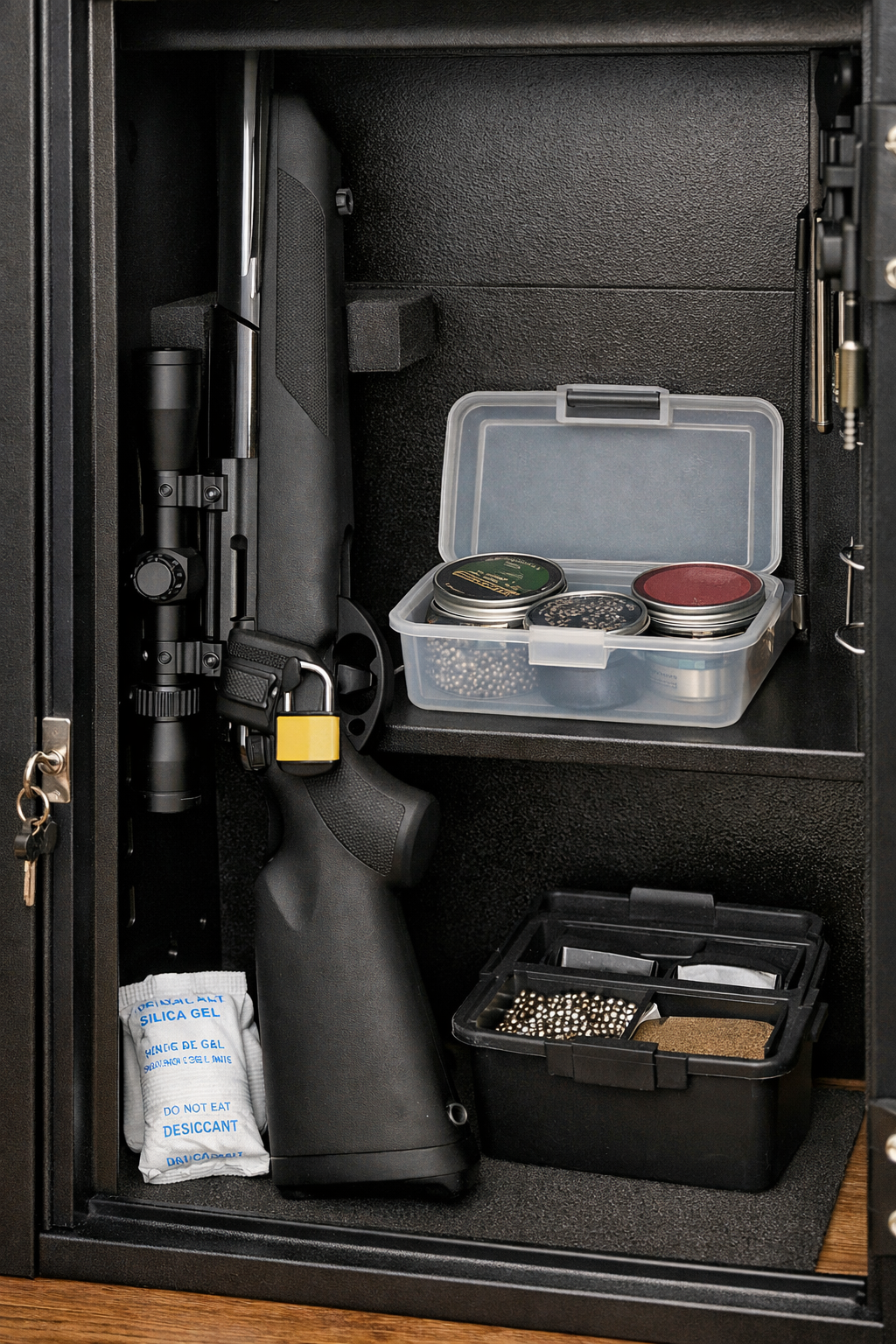
When people ask about Canadian airgun storage laws, what they usually want to know is: “What’s the safest, most reasonable way to store my air rifle so kids or visitors can’t access it, and so it won’t be stolen?” The best answer is to layer your safety measures.
1) Store your air rifle unloaded and verified clear
Make it a habit: before storage, visually and physically confirm the airgun is not loaded. Remove any magazine, ensure there’s no pellet in the chamber, and don’t leave a pellet seated “for next time.” A quick check takes seconds and eliminates a common source of accidental discharges.
2) Use a secure storage method (lock + barrier)
Even for license-free airguns, a secure approach is to use both a locking device and a locked container or room. This is common-sense airgun safety storage and aligns with the goal behind Canadian storage expectations: preventing easy access by unauthorized people.
- Trigger lock or cable lock: Helps prevent the airgun from being fired if it’s handled.
- Locked hard case or lockable cabinet: Adds a physical barrier against casual access and makes theft more difficult.
- Locked room as an added layer: Useful when you don’t have a cabinet yet, but still want a controlled access area.
If your household includes children, teens, or frequent visitors, treat these measures as non-negotiable. Curiosity and peer pressure are real, and “it’s just an airgun” is exactly how accidents happen.
3) Store ammunition separately
Pellets and BBs should be stored away from the airgun, ideally in a separate locked drawer or container. While pellets aren’t “ammunition” in the same sense as firearm cartridges, separating them is a proven safety habit and reduces the chance of impulsive misuse.
4) Manage power sources: CO2 and PCP considerations
Different powerplants have different storage concerns:
- CO2 airguns: Many owners remove the CO2 cartridge for storage (especially longer storage periods) to reduce seal wear and prevent slow leaks. Follow your manufacturer’s guidance.
- PCP airguns: It’s common to store PCPs with some pressure in the cylinder to protect seals, but you should still store them secured and access-controlled. Avoid extreme heat (for example, a sunny room or a vehicle) because pressure changes with temperature.
- Spring/piston air rifles: Store un-cocked. Never store with the spring under tension.
5) Pick a smart location: cool, dry, out of sight
Choose a storage location that balances security and equipment care:
- Out of sight: Avoid leaving cases where guests or service workers can see them.
- Dry: Use a dehumidifier or desiccant packs in cabinets to reduce rust risk.
- Stable temperature: Avoid garages that swing from humid heat to freezing cold if you can. If you must store in a garage, use a sealed case with moisture control and inspect regularly.
6) Set household rules (and stick to them)
The best lock can’t fix inconsistent habits. Consider a simple home policy:
- Only adults retrieve or put away the airgun.
- No handling when friends are over unless it’s a supervised session.
- No “show and tell” outside of a controlled setting.
- After shooting: unload, verify clear, lock, store—every time.
Backyard airgun safety: storage and “ready access” matter
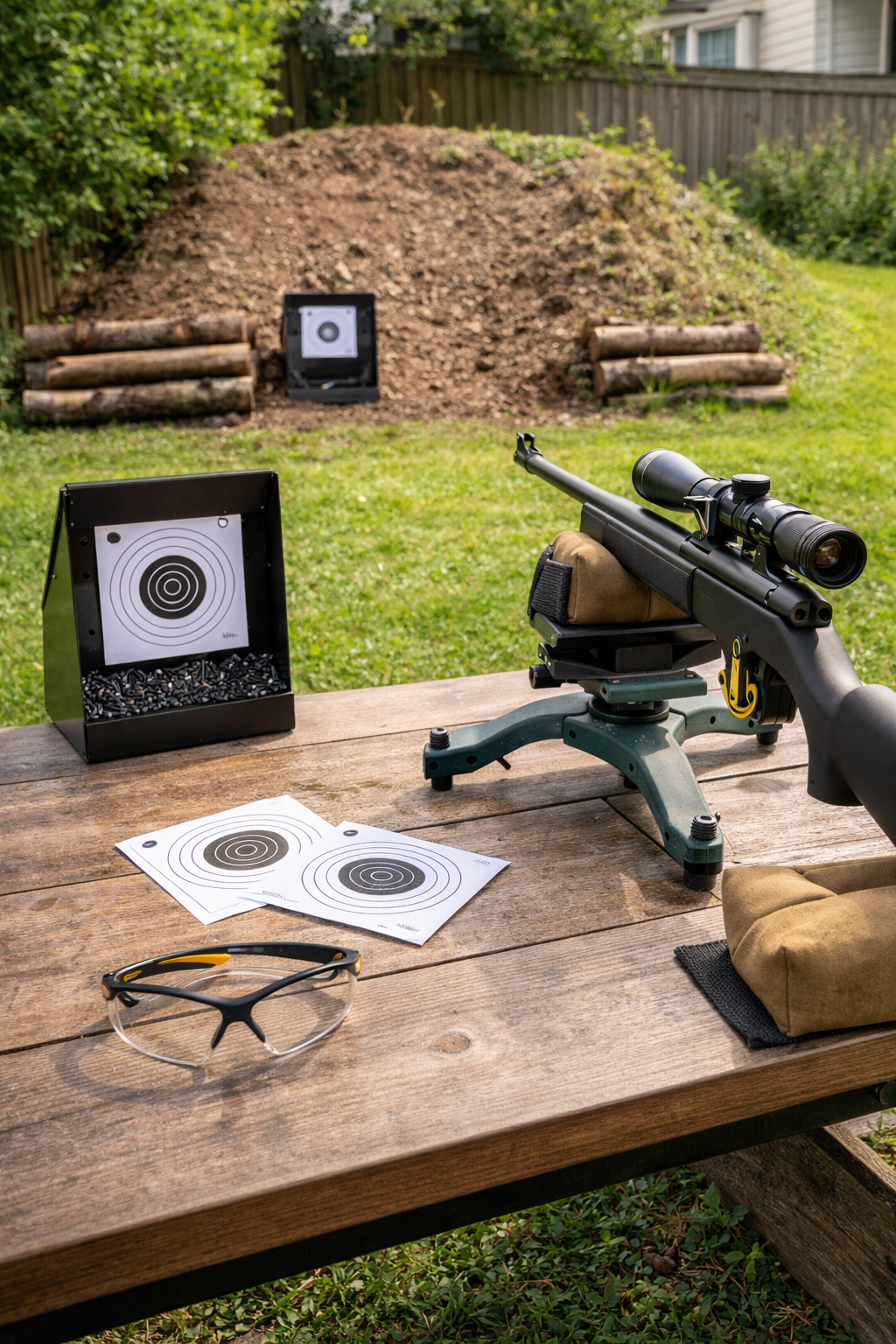
Backyard practice is where most casual airgun use happens—and where small mistakes can have the biggest consequences. Backyard airgun safety isn’t only about what happens at the firing line; it’s also about what happens before and after.
If you’re stepping inside for “just a minute,” don’t leave an airgun unattended on a bench, leaning against a fence, or resting in a corner of the yard. Unattended access—especially by kids, neighbours, or visitors—is one of the fastest ways a routine session turns into a serious incident.
When you finish shooting, go straight to your storage routine. The “I’ll put it away later” moment is a common failure point.
Transporting license-free airguns in Canada: keep it discreet, secure, and boring
Transport is where many responsible owners get tripped up—not because they’re doing anything unsafe, but because their setup draws attention or creates confusion. Best practice for transport license-free airguns Canada is to make the trip as low-risk and low-drama as possible.
1) Always transport unloaded
Before you leave home:
- Remove the magazine (if applicable).
- Confirm the chamber is empty.
- Engage a safety only after the airgun is verified clear (a safety is not a substitute for unloading).
Unloaded transport is the baseline for secure air rifle transport.
2) Use a case—preferably lockable
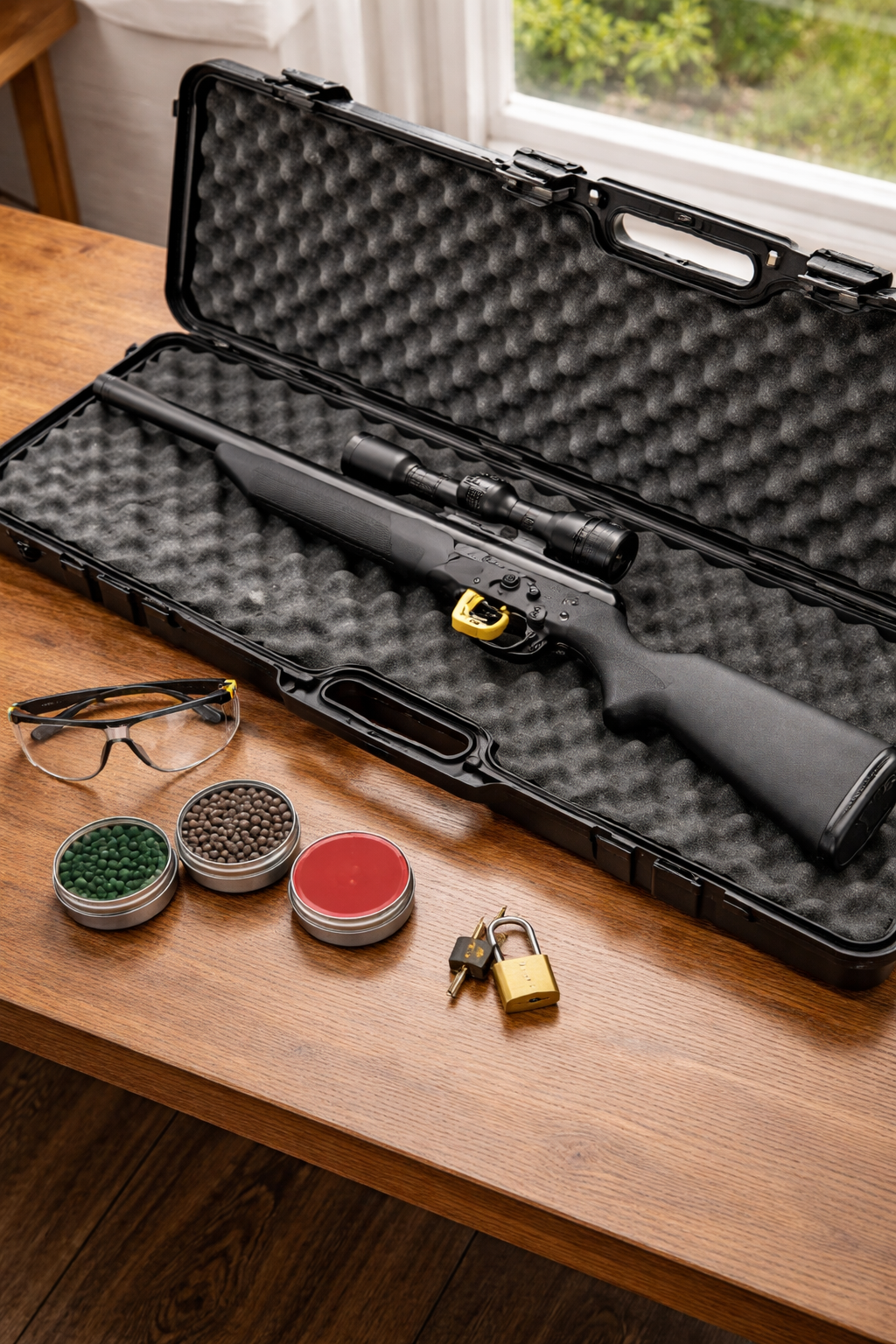
Transport your airgun in a case, not loose in the vehicle. A proper case protects the airgun and signals responsible handling. A lockable hard case is ideal, but a zippered soft case plus a small luggage lock is also a meaningful improvement over carrying it uncovered.
Using a case also reduces the chance that someone interprets what they see as a firearm being carried in public, which can create unnecessary problems even if your intentions are harmless.
3) Separate the airgun from pellets/BBs and gas
For organization and safety, keep pellets/BBs in a separate pouch or compartment. If you’re transporting CO2 cartridges or an air cylinder, keep them secured so they can’t roll around. Temperature matters, too—avoid leaving pressurized items in a hot vehicle for long periods.
4) Choose smart placement in your vehicle
Where you put the case matters:
- Best: locked trunk or a covered cargo area.
- Next best: behind the last row of seats, covered, with minimal access.
- Avoid: the passenger seat or anywhere visible through windows.
Visibility increases theft risk and can alarm others. Discreet transport is part of safe ownership.
5) Make “quick stops” truly quick—or bring it with you
Stopping for fuel is one thing. Leaving an airgun in a vehicle while you shop for an hour is another. Vehicles are common theft targets. If you must leave it briefly, ensure it is cased, out of sight, and ideally locked in the trunk or a locked cargo area. Better yet, plan your route so you can go directly to and from your shooting location.
6) Carry paperwork and know what you own
It can help to keep a record of the make/model and a proof of purchase (digital is fine). If your airgun is specifically sold as under 500 fps, having the product details available can reduce confusion if questions come up. This isn’t about expecting trouble; it’s about being prepared and calm.
Going to a range, crown land, or private property: a quick checklist
Before you head out, run through a short list to keep your trip safe and smooth:
- Airgun unloaded and verified clear
- In a case (locked if possible)
- Pellets/BBs stored separately
- CO2/PCP charging equipment secured
- Eye protection packed
- Target and backstop plan confirmed
- Local rules checked (range rules, municipal bylaws, property permission)
Common mistakes that lead to incidents (and how to avoid them)
Most problems come from predictable patterns, not rare events. Here are common issues seen with casual airgun use:
- Leaving an airgun accessible “because it’s not a firearm”: Treat it as a serious tool. Lock it up.
- Transporting it uncovered: Use a case to prevent misunderstandings and reduce theft risk.
- Storing it loaded: Build the habit of unloading and verifying clear before storage.
- Letting kids handle it unsupervised: Supervision is not optional, and secure storage is your backstop.
- Shooting without a reliable backstop: For backyard airgun safety, a safe backstop matters as much as safe storage.
What to do if your situation changes
Storage and transport should evolve with your household and your equipment:
- New child in the home (or frequent visitors): Upgrade to a locked cabinet and consider adding a second lock layer.
- Moving to a new city: Re-check local discharge bylaws and adjust your backyard routines.
- Upgrading to higher-powered airguns: Revisit legal classifications and handling expectations. If you move beyond license-free models, your obligations may change.
Recommended gear for safer storage and transport
You don’t need a complicated setup, but a few items make responsible ownership much easier:
- Trigger or cable lock
- Lockable hard case or quality soft case
- Desiccant packs or dehumidifier for cabinets
- Pellet/BB containers with secure lids
- Basic maintenance supplies (to keep the airgun reliable and safe)
If you’re looking for cases, locks, and other practical add-ons, you can browseAccessories.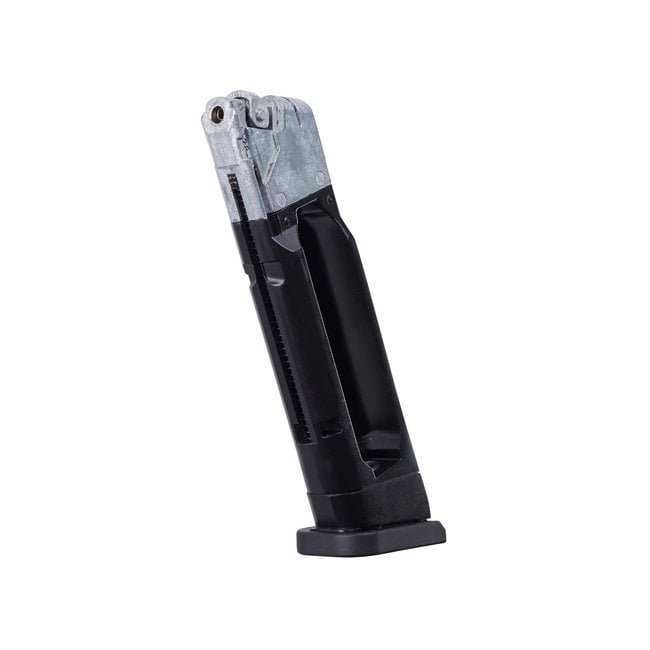
Key takeaways
Responsible ownership of license-free air rifles comes down to consistent habits:
- Store airguns unloaded, secured, and access-controlled.
- Use layered security: lock + locked container/area.
- Transport in a case, out of sight, and unloaded.
- Plan for backyard airgun safety with the same seriousness as a formal range session.
- When in doubt, err on the side of discretion and security.
If you’re choosing a license-free model for backyard practice or entry-level target shooting, see theUnder 500fps - NO LICENSE REQUIRED collection. For a deeper dive into legal context, theCanadian Airgun Laws article is a helpful reference.


