
Powder Ball vs Rubber Ball vs Glass Breaker: Self-Defense Ammo Compared in Canada
The three main self-defense ammo types differ in one thing above all: how they transfer energy on impact. Rubber balls deliver blunt, flexible pain-compliance; powder balls are frangible rounds that break on contact for marking and lower-risk training; and glass breaker rounds are hard, dense polymer projectiles built for maximum impact and barrier penetration. The right choice depends on your launcher's calibre and whether you are training or preparing for home defense. You can compare every option in our self-defense ammo collection, and this guide explains exactly how they behave.
What is the difference between powder balls, rubber balls, and glass breaker rounds?
The difference comes down to hardness and how the projectile behaves when it hits. Rubber balls flex and spread their energy over a wider area, which is why they are the standard pain-compliance and training round. Powder balls are designed to fracture, leaving a visible mark while reducing the risk of injury. Glass breaker rounds use a hard solid polymer that holds together and concentrates force, so they penetrate barriers and deliver the sharpest impact of the common less-lethal options.
All three are fired from the same family of T4E and Umarex P2P launchers, so most owners keep more than one type on hand: cheap rubber or powder balls for practice, and a harder round loaded for defense. The broad self-defense ball ammunition guide for Canada covers the category at a high level; the table below is the head-to-head most buyers actually need.
| Projectile type | Impact behaviour | Calibres in stock | Typical pack | Price (CAD) | Best for |
|---|---|---|---|---|---|
| Rubber ball | Blunt and flexible; pain-compliance, lower penetration | .43, .50, .68 | 20–430 ct | $8.50–49.99 | Deterrence, repeated training |
| Powder ball (frangible) | Breaks on impact and marks; steel-core versions add mass | .43, .50, .68 | 10–500 ct | $8.75–69.99 | Marking, lower-risk practice |
| Glass breaker / Quick Access Ball | Hard solid polymer, denser; higher penetration | .43, .50, .68 | 100 ct | $19.99–24.99 | Maximum impact, barriers and glass |
| Aluminum projectile | Dense metal; heaviest kinetic energy | .50, .68 | 50 ct | $20.95–39.99 | Maximum stopping energy |
| Inert powder rounds | Less-lethal, non-irritant marking and defense | .68 | 100 ct | $220.00 | Bulk defense and training |
One pattern we see constantly at the counter: people buy a single type and discover they wanted two. A box of rubber or powder balls for the range plus a harder defensive round is the setup most owners settle on.
Which self-defense projectile hits hardest?
For pure impact, aluminum projectiles and glass breaker rounds lead, followed by steel-core powder balls, with standard rubber balls the softest. Density and hardness drive felt impact: a dense aluminum .68 round carries more energy into a small area than a flexible rubber ball of the same size. That is exactly why the harder rounds are reserved for defensive loads rather than casual practice.
Harder is not automatically better, though. The trade-off is control and risk: a rubber ball is forgiving enough for repeated training and deters most threats, while a glass breaker or aluminum round is chosen when stopping power and the ability to defeat a barrier outweigh everything else. Match the round to the job rather than defaulting to the hardest option.
- Highest impact: aluminum projectiles (.50/.68) and glass breaker Quick Access Balls.
- Middle ground: steel-core powder balls, which add mass over standard frangible rounds.
- Most controllable: standard rubber balls, the everyday training and deterrence round.
What calibre should you choose: .43, .50, or .68?
Choose .68 for the widest range of defensive rounds, .50 for an all-round balance, and .43 for the cheapest high-volume training. Your launcher dictates the calibre, but if you are still selecting a platform, the calibre decision shapes both your ammo cost and your defensive options. The breakdown below maps each calibre to the round types available and the platforms they feed.
| Calibre | Common platforms | Round types available | Relative energy | Notes |
|---|---|---|---|---|
| .43 | T4E TM4/TR, compact P2P | Rubber, powder, paintball | Lower | Highest round count per pack; budget training |
| .50 | T4E TR50, Umarex HDP50/HDR50 | Rubber, powder, paintball, glass breaker, aluminum | Medium | The versatile middle ground |
| .68 | T4E TM68/HDR68, Umarex P2P .68 | Rubber, powder, glass breaker, aluminum, inert | Highest | Most defensive options; widest in-stock selection |
For a deeper breakdown of how the calibres behave on the launcher side, see our T4E calibre guide for Canada and the focused .50 vs .68 self-defense launcher comparison. When you know your calibre, the matching rounds are grouped in the self-defense ammo category.
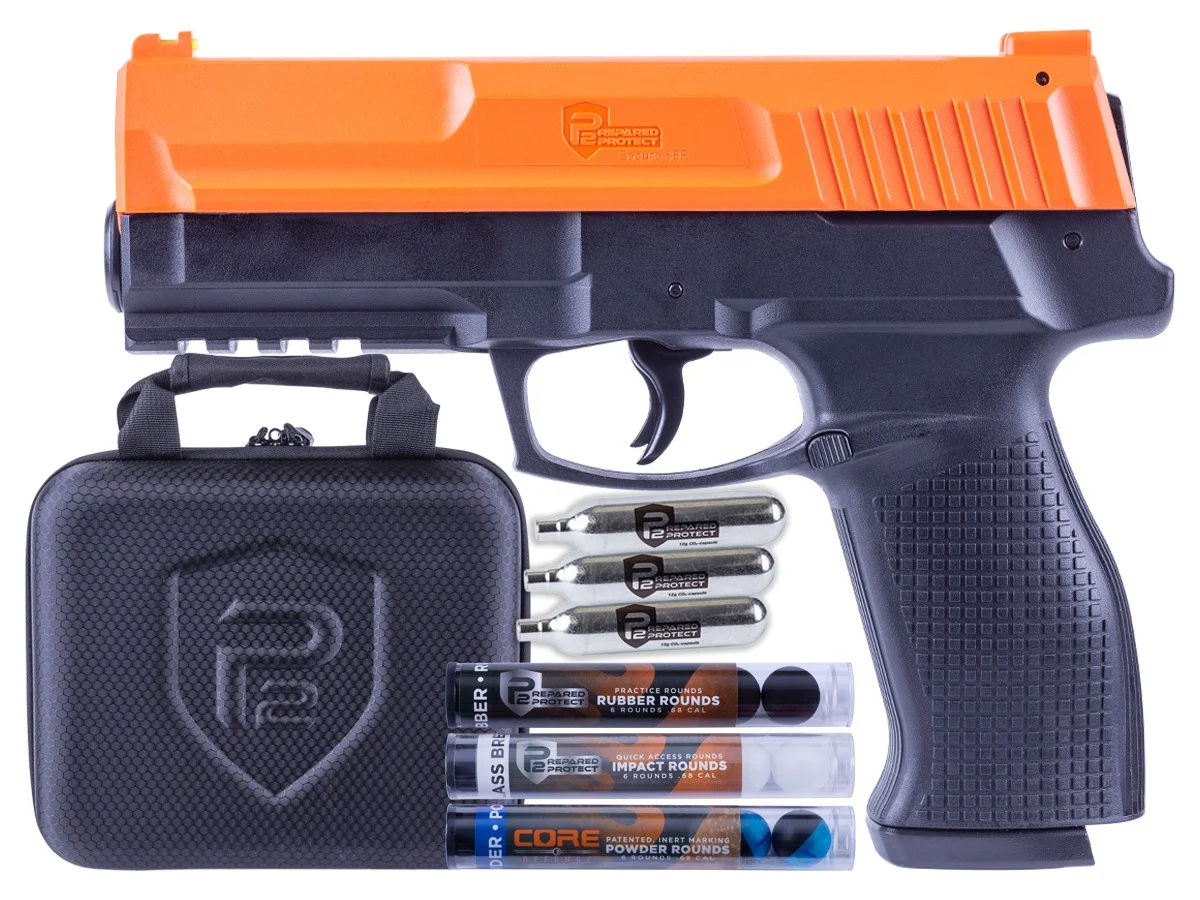
Are rubber balls or powder balls better for home defense?
Rubber balls are the more common home-defense load, but a steel-core powder ball or a harder glass breaker round is often preferred when impact matters most. Rubber rounds strike a practical balance: enough force to deter, low enough penetration to reduce over-travel risk indoors, and cheap enough to practise with the same launcher year-round. Powder balls earn their place in training because they mark hits, which makes them useful for skill-building before you load a defensive round.
The honest answer is that the launcher and the magazine matter as much as the projectile. A consistent, reliable platform you have actually practised with beats an exotic round you have never fired. Pair your ammo choice with a self-defense pistol or defensive carbine you can run confidently, and keep spare magazines ready so a reload is never the weak link.
Do glass breaker rounds actually break glass?
Yes, that is their design purpose: glass breaker rounds (Quick Access Balls) use a hard solid polymer that holds together on impact rather than deforming. The same property that lets them crack a window is what gives them the sharpest felt impact of the common less-lethal rounds. They are the round to reach for when you need to defeat a light barrier or want maximum effect on target.
The trade-off is that a harder round behaves differently from a soft rubber ball, so confirm function and point of impact in your specific launcher before relying on it. Buy a 100-count box, run a portion through your platform, and note how it feeds and where it strikes at realistic distances.
What ammo works with T4E and Umarex P2P launchers?
T4E and Umarex P2P launchers are built around .43, .50, and .68 calibre rounds, and our self-defense ammo is matched to those platforms. Rubber balls, powder balls, glass breaker rounds, aluminum projectiles, and inert powder rounds are all available in the calibres these markers use. Always match the calibre stamped on your launcher, and check the count and pack format so you are buying training volume and defensive rounds in the right proportion.
If you are still choosing a platform, our comparison of T4E vs Byrna vs P2P less-lethal launchers walks through how the ecosystems differ. Whatever you run, keep CO2 stocked alongside your ammo — these launchers are gas-powered, and you can find cartridges and bulk cylinders in our CO2 cylinders collection.
Is self-defense ammo legal to own in Canada?
Less-lethal projectile ammunition for air-powered launchers is widely available to Canadian buyers, but the rules around how launchers and certain rounds may be used are specific and worth understanding before you buy. Projectile choice, launcher velocity, and intended use all factor into what is appropriate, and the landscape is different from firearm ammunition. We stock what is permitted for sale in Canada and ship across the country.
This article is a buying guide, not legal advice. For a clear, Canada-focused overview of what you can own and the considerations that apply to non-lethal home defense, read our Canadian legal guide to non-lethal home defense airguns. If you want a non-projectile layer to your plan, our defense aerosols are worth a look alongside your launcher and ammo.
Frequently asked questions about self-defense ammo
Can you use a paintball or P2P launcher for self-defense in Canada?
Air-powered launchers firing less-lethal rounds are used by some Canadians as a home-defense deterrent, paired with the right projectile. Effectiveness depends on the platform, the round, and your training. Read our Canadian legal guide before building a plan, and treat any launcher as one layer rather than a guaranteed solution.
Do powder balls hurt more than rubber balls?
Standard powder balls are frangible and prioritise marking over impact, so a basic powder ball does not necessarily hurt more than a rubber ball. Steel-core powder balls are the exception: the added mass increases felt impact while keeping the round less-lethal. For maximum impact, glass breaker or aluminum rounds lead.
What calibre is best for self-defense: .43, .50, or .68?
.68 offers the widest range of defensive rounds and the highest energy, which is why many home-defense owners choose it. .50 is the balanced middle ground, and .43 is the most economical for high-volume training. Your launcher's calibre is the deciding factor, so match the ammo to the platform you own.
Can I mix ammo types in the same magazine?
It is generally better not to mix projectile types in one magazine, because different rounds can feed and strike differently. Keep training rounds and defensive rounds in separate, clearly identified magazines so you always know what is loaded, and confirm reliable feeding for each type in your launcher.
How should I store self-defense ammo, and does it expire?
Store rubber, powder, and polymer rounds in a cool, dry place away from direct sunlight and extreme heat, which can degrade rubber and frangible materials over time. Solid polymer and aluminum rounds are the most shelf-stable. Rotate training stock regularly and inspect defensive rounds periodically for deformation.
Where to start?
Pick the projectile type that matches your job first, then buy a defensive round and a cheaper training round in the same calibre. Most owners are best served keeping rubber or powder balls for the range and a harder glass breaker or aluminum round loaded for defense.
To shop online, start with these collections:
- Self-defense ammo collection — rubber, powder, glass breaker, aluminum, and inert rounds in .43, .50, and .68.
- Self-defense pistols — T4E and P2P launchers these rounds feed.
- Self-defense rifles — carbine-format launchers for higher capacity.
- CO2 cylinders — the 12g cartridges and bulk cylinders that power your launcher.
- Self-defense and training category — everything needed to build out a complete kit.
If you are starting out, buy one 100-count box of a defensive round and a larger pack of training rounds in your calibre, then put a portion through your launcher to confirm feeding and point of impact before you rely on it.


