
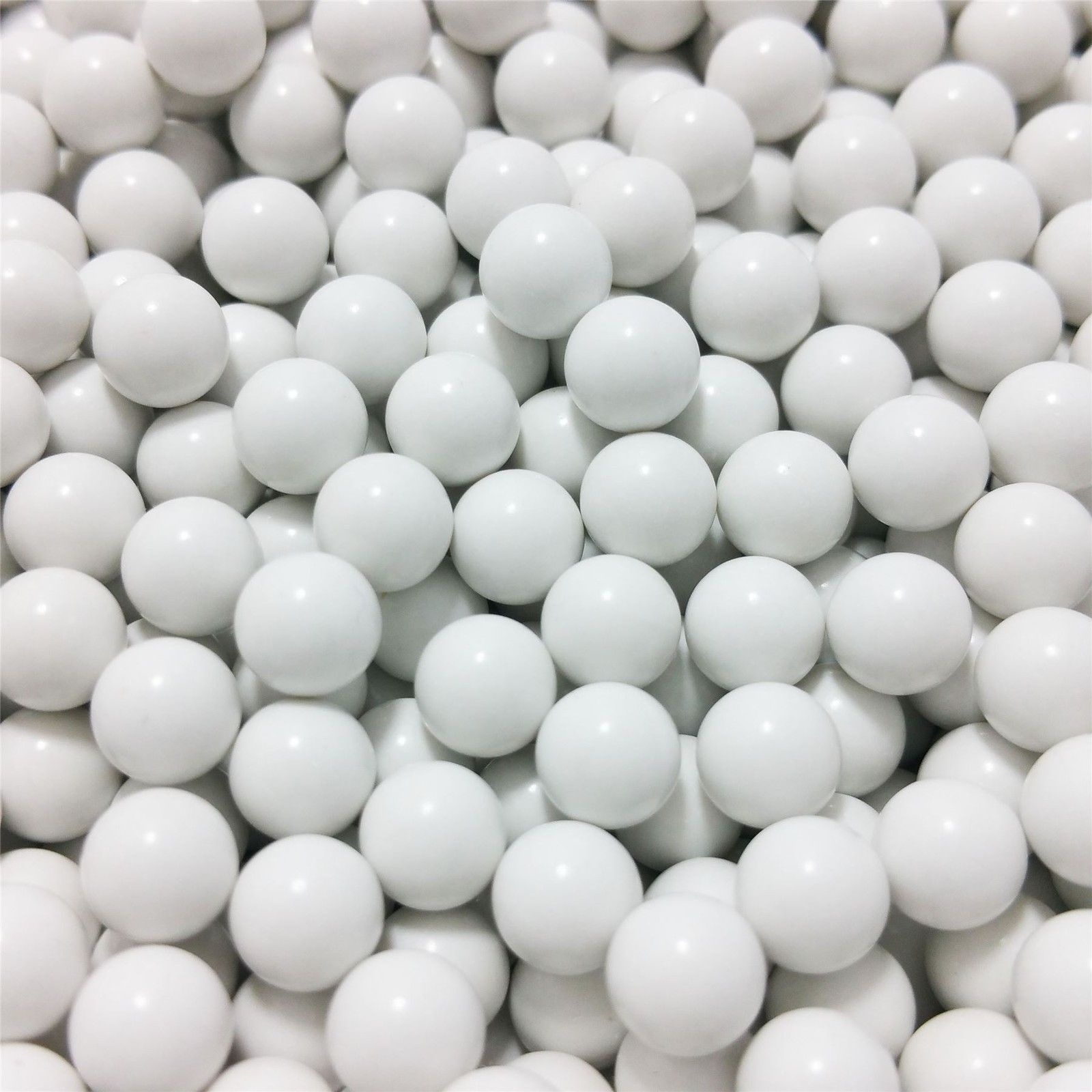
How 6mm BB Weight Affects Airsoft Pistol Accuracy and Range: The Complete Guide
When you're standing at the airsoft field, watching your shots curve unpredictably or fall short of your target, the culprit might not be your pistol—it could be your BB weight. The weight of your 6mm BBs is one of the most critical yet often overlooked factors affecting yourairsoft pistol's performance.
Choosing the right BB weight isn't about picking the heaviest or lightest option on the shelf. It's about understanding the physics at play, matching ammunition to your pistol's specifications, and optimizing for your specific playing style and environment. This comprehensive guide will help you understand exactly how BB weight impacts accuracy, range, and overall performance, empowering you to make informed decisions that elevate your game.
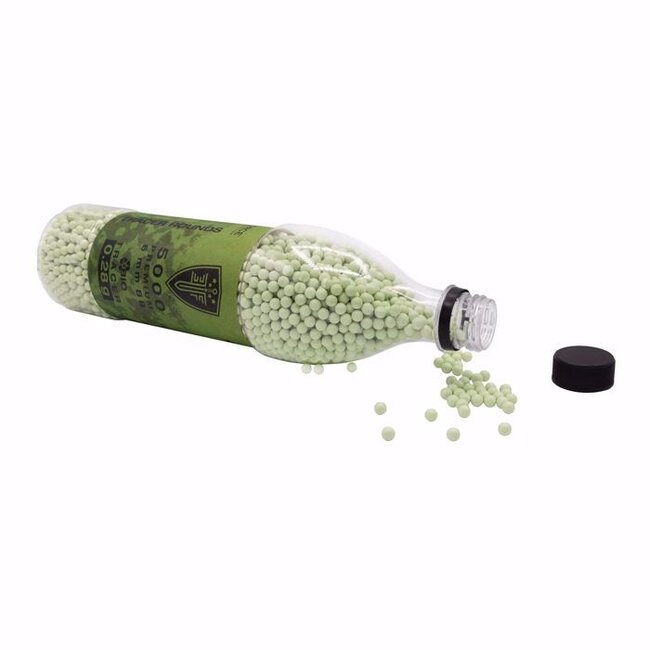
Understanding BB Weight: The Basics
Airsoft BBs are manufactured in a range of weights, typically measured in grams. The most common weights available for6mm airsoft applications include:
- 0.12g: Ultra-lightweight, generally considered unsafe and rarely used
- 0.20g: The standard weight for chronograph testing and beginner play
- 0.23g: A step up for improved outdoor performance
- 0.25g: Popular mid-weight for versatile performance
- 0.28g: Preferred by intermediate to advanced players
- 0.30g: Heavy weight for precision and wind resistance
- 0.32g - 0.36g: Specialized weights for upgraded pistols
- 0.40g+: Very heavy weights primarily for high-powered sniper rifles
Each weight category affects your BB's flight characteristics differently. Understanding these differences is essential for optimizing your pistol's performance.
The Physics Behind BB Weight and Performance
To understand how BB weight affects your shots, we need to examine the fundamental physics governing projectile motion in airsoft.
Kinetic Energy and Momentum
When your pistol fires, it imparts a specific amount of kinetic energy to the BB. This energy is determined by your pistol's power source—whether spring, gas, or electric—and remains relatively constant regardless of BB weight (assuming proper hop-up adjustment).
The formula for kinetic energy is: KE = ½ × mass × velocity²
Here's the crucial insight: for a given amount of energy, lighter BBs will have higher velocity but lower momentum, while heavier BBs will have lower initial velocity but higher momentum. This fundamental relationship creates the performance trade-offs we'll explore throughout this article.
Initial Velocity vs. Sustained Velocity
Lighter BBs exit your barrel at higher speeds. A 0.20g BB might leave your pistol at 350 feet per second (fps), while a 0.30g BB from the same pistol might only achieve 280 fps. This seems like a disadvantage for heavier BBs—and initially, it is.
However, velocity isn't the complete story. Lighter BBs decelerate much more rapidly than heavier BBs due to air resistance. By the time your BB reaches 50 feet, that initial velocity advantage has often disappeared, with heavier BBs maintaining more of their speed.
This is where momentum becomes critical. Heavier BBs have more momentum (mass × velocity), meaning they resist deceleration more effectively. While they start slower, they maintain velocity better over distance.
The Hop-Up Effect
The hop-up system in your airsoft pistol applies backspin to BBs as they leave the barrel. This backspin creates the Magnus effect—an aerodynamic phenomenon where the spinning BB experiences an upward force that counteracts gravity.
BB weight significantly affects how the hop-up performs:
- Light BBs: Require less hop-up to achieve lift but are more susceptible to over-hop, causing them to rise sharply and then drop
- Heavy BBs: Require more hop-up to generate sufficient lift but maintain more stable, flatter trajectories once properly adjusted
The hop-up adjustment that works perfectly for 0.20g BBs will cause 0.30g BBs to drop significantly short. This is why adjusting hop-up when changing BB weights is absolutely essential.
How BB Weight Affects Accuracy
Accuracy—the ability to consistently hit the same point of aim—is perhaps the most important performance metric for airsoft pistol users. BB weight influences accuracy through several mechanisms.
Wind Resistance and Deflection
One of the most significant accuracy challenges in outdoor airsoft is wind deflection. Lighter BBs are dramatically more affected by wind than heavier ones.
A 0.20g BB traveling at 350 fps can be deflected several feet by a moderate crosswind at 50 feet. The same wind might only deflect a 0.30g BB a few inches. This difference becomes even more pronounced at longer ranges or in gusty conditions.
For outdoor gameplay, heavier BBs provide significantly more predictable trajectories. Indoor players, where wind isn't a factor, can often use lighter BBs without this concern.
Trajectory Stability
Heavier BBs fly with more stable, predictable trajectories. Their higher momentum makes them less susceptible to:
- Turbulent air currents
- Brush and vegetation interference
- Inconsistencies in hop-up application
- Minor barrel imperfections
This stability translates to tighter groupings and more consistent point of impact, even when environmental conditions aren't perfect.
Hop-Up Consistency
When properly adjusted, hop-up systems work more consistently with heavier BBs. The increased mass provides more surface area and contact time for the hop-up bucking to grip and impart spin. This results in more uniform backspin from shot to shot.
Lighter BBs can sometimes slip or receive inconsistent spin, especially if the hop-up bucking is slightly worn or dirty. This inconsistency manifests as vertical spread in your shot groups.
Impact Point Consistency
Heavier BBs tend to have more consistent points of impact because they're less affected by minor variables:
- Slight variations in fps from shot to shot have less impact on trajectory
- Small differences in hop-up application affect flight less dramatically
- Environmental factors like temperature changes produce smaller trajectory variations
This consistency is crucial for precision shooting, whether you're engaging targets at 75 feet or performing trick shots at close range.

How BB Weight Affects Range
Range—the maximum effective distance at which you can reliably hit targets—depends on both velocity retention and trajectory control. BB weight affects range in complex ways that often surprise new players.
Maximum Distance vs. Effective Range
It's important to distinguish between maximum distance (how far a BB can travel) and effective range (the distance at which you can accurately hit targets).
Lighter BBs often achieve greater maximum distances because their higher initial velocities allow them to travel farther before gravity and air resistance bring them down. However, their erratic flight paths and wind susceptibility severely limit their effective range.
Heavier BBs may not travel quite as far in ideal conditions, but their stable trajectories and wind resistance typically provide superior effective range—the distance that actually matters in gameplay.
Velocity Retention Over Distance
As mentioned earlier, heavier BBs retain velocity better than lighter ones. This velocity retention has profound implications for range performance.
Consider this comparison at various distances with a pistol shooting 350 fps with 0.20g BBs:
At Muzzle:
- 0.20g BB: 350 fps
- 0.30g BB: 280 fps
At 50 Feet:
- 0.20g BB: ~270 fps (77% retention)
- 0.30g BB: ~255 fps (91% retention)
At 100 Feet:
- 0.20g BB: ~210 fps (60% retention)
- 0.30g BB: ~235 fps (84% retention)
At distances beyond 50 feet, the heavier BB is actually traveling faster and carrying more energy, resulting in better range and impact.
Trajectory Arc and Holdover
BB weight significantly affects trajectory arc—the curved path your BB follows due to gravity.
Lighter BBs have more pronounced arcs. They rise quickly due to hop-up, reach a peak, then drop rapidly. This creates a "rainbow" trajectory that requires significant holdover (aiming above your target) at longer ranges.
Heavier BBs produce flatter trajectories. While they still arc, the curve is gentler and more predictable. This flatter trajectory means:
- Less holdover required at medium ranges
- More intuitive aiming
- Easier compensation for distance variations
- Better performance when shooting through gaps or around cover
For pistol users engaging targets between 30-75 feet, the flatter trajectory of heavier BBs often translates to practical range advantages despite slightly lower maximum distance potential.
Energy on Target
Effective range isn't just about getting a BB to the target—it's also about delivering enough energy to register a hit (on electronic targets) or be felt by the opponent.
Heavier BBs deliver more energy on target at extended ranges because they retain velocity better. While a 0.20g BB might technically reach 100 feet, it may lack sufficient energy to reliably trigger hit sensors or be felt through gear. A 0.30g BB arriving with more retained energy provides more reliable hit registration.
Matching BB Weight to Your Pistol's Power
Not allairsoft pistols can effectively use all BB weights. Your pistol's power level determines which BB weights will perform optimally.
Low-Power Pistols (250-300 fps with 0.20g BBs)
Budget spring pistols, many AEPs (automatic electric pistols), and some non-blowback gas pistols fall into this category. These pistols typically perform best with:
- 0.20g BBs: Standard choice for indoor play
- 0.23g BBs: Slight improvement in outdoor conditions
- 0.25g BBs: Maximum recommended weight for most low-power pistols
Using BBs heavier than 0.25g in low-power pistols often results in dramatically reduced range because the pistol lacks sufficient energy to accelerate and stabilize the heavier projectiles effectively.
Mid-Power Pistols (300-350 fps with 0.20g BBs)
Most gas blowback pistols, many CO2 pistols, and quality AEPs fall into this range. These pistols offer versatility:
- 0.20g BBs: Good for indoor CQB and budget-conscious players
- 0.25g BBs: Excellent all-around choice for mixed play
- 0.28g BBs: Optimal for outdoor games and improved accuracy
- 0.30g BBs: Best for upgraded pistols or players prioritizing accuracy
This power level provides enough energy to take advantage of heavier BBs' benefits while still being field-legal at most venues.
High-Power Pistols (350-400+ fps with 0.20g BBs)
Heavily upgraded pistols, some CO2 pistols, and high-performance gas blowback models can exceed standard field limits with 0.20g BBs. These pistols often require heavier BBs to:
- Reduce velocity to field-legal limits
- Take full advantage of available power
- Maximize accuracy and range potential
For high-power pistols:
- 0.28g BBs: Minimum for taking advantage of extra power
- 0.30g - 0.32g BBs: Optimal range for most high-power pistols
- 0.36g+ BBs: For maximum precision in heavily upgraded builds
Environmental Considerations
Your playing environment should significantly influence your BB weight choice.
Indoor CQB Environments
Indoor close-quarters battle (CQB) venues eliminate wind as a factor and typically involve engagements under 50 feet. In these conditions:
- Lighter BBs (0.20g - 0.23g) often perform adequately
- Lower cost per BB matters more with high rates of fire
- Faster initial velocity can be advantageous for quick target acquisition
- Reduced ricochet risk with lighter BBs
However, many indoor players still prefer 0.25g BBs for their improved consistency and better performance when engaging through doorways or windows where slight air currents exist.
Outdoor Field Play
Outdoor environments present challenges that heavily favor heavier BBs:
- Wind: The single biggest factor favoring heavy BBs
- Vegetation: Leaves and branches deflect lighter BBs more easily
- Temperature variations: Heavier BBs are less affected by temperature-related gas pressure changes
- Extended ranges: Most engagements occur at distances where heavy BBs excel
For outdoor play, 0.25g should be considered the minimum, with 0.28g - 0.30g being optimal for most players.
Weather Conditions
Specific weather conditions affect BB weight selection:
Hot Weather: Gas pistols experience increased pressure, potentially over-hopping lighter BBs. Heavier BBs compensate and take advantage of extra power.
Cold Weather: Gas pressure drops, reducing fps. Using slightly lighter BBs can help maintain acceptable velocity, though this is a compromise—heavier BBs still fly more accurately.
Rain: Water droplets affect lighter BBs more significantly. Heavier BBs maintain trajectory better in precipitation.
Wind: As discussed, heavier BBs dramatically outperform lighter ones in windy conditions.
Cost Considerations and Practical Trade-Offs
While performance is important, practical considerations also matter.
Price Per BB
BB weight significantly affects cost:
- 0.20g BBs: Cheapest option, often $10-15 per 5,000 rounds
- 0.25g BBs: Moderate pricing, typically $15-20 per 5,000 rounds
- 0.28g BBs: Higher cost, usually $18-25 per 5,000 rounds
- 0.30g+ BBs: Premium pricing, $25-35+ per 5,000 rounds
For players shooting thousands of rounds per game day, this cost difference adds up. Many players use heavier BBs in their primary weapons while running lighter, cheaper BBs in sidearms to manage costs.
Magazine Capacity Considerations
Heavier BBs mean more physical weight in your magazines. While the difference seems minimal per BB, loading a 30-round magazine with 0.30g BBs instead of 0.20g BBs adds about 3 grams of weight—not significant for a single magazine, but potentially noticeable when carrying multiple mags.
For gas magazines, heavier BBs may slightly reduce the number of shots per gas fill due to the extra energy required to accelerate heavier projectiles, though this effect is minimal with quality magazines.
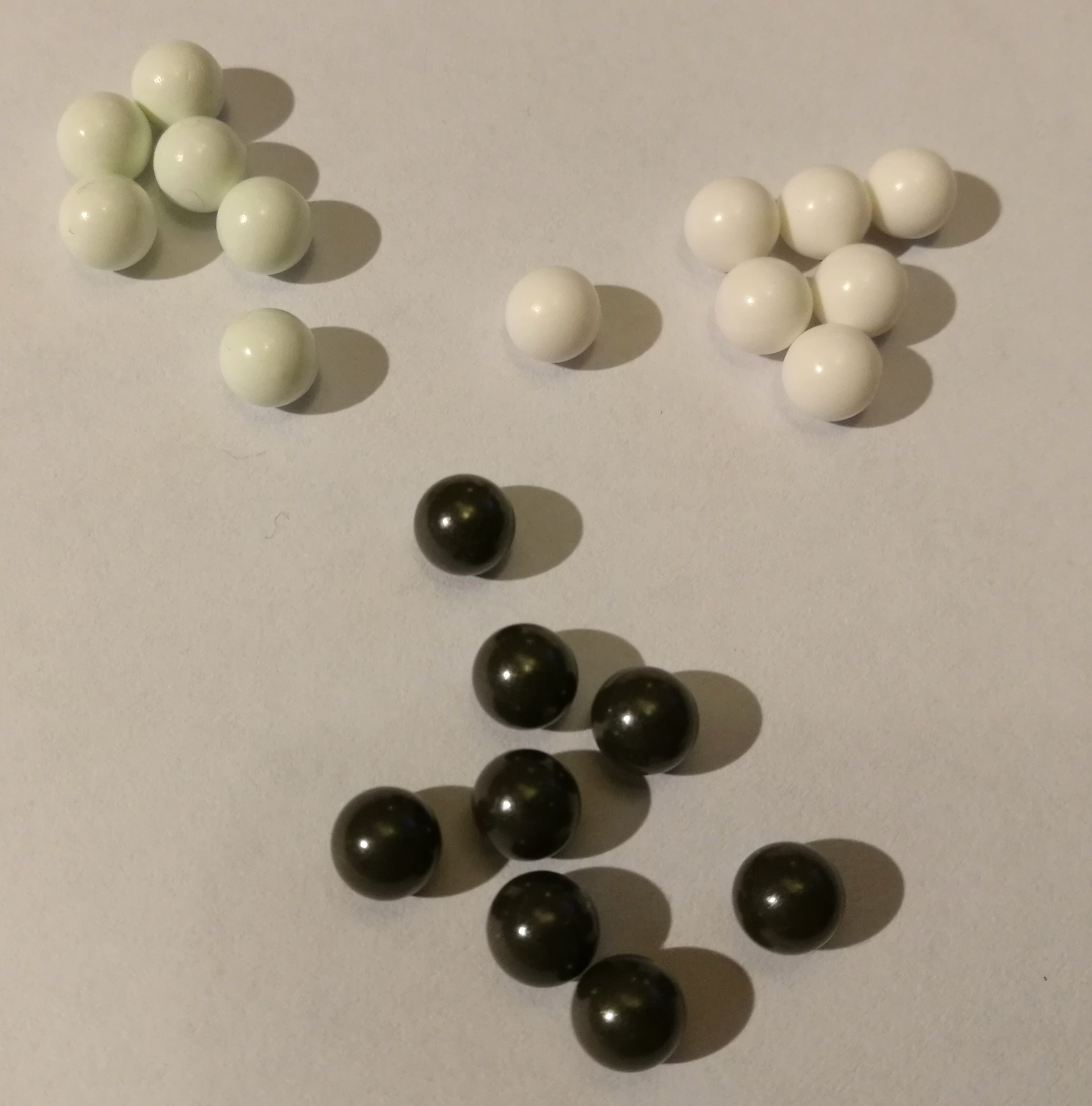
Testing and Finding Your Optimal BB Weight
The best BB weight for your specific pistol, playing style, and environment requires testing. Here's a systematic approach:
Step 1: Establish Your Baseline
Start with 0.25g BBs as your baseline. These represent a good middle ground for most6mm airsoft pistols. Chronograph your pistol to establish your fps with 0.25g BBs and ensure you're field-legal.
Step 2: Test Adjacent Weights
Purchase small quantities of the weights immediately above and below your baseline (0.23g and 0.28g if starting with 0.25g). Test each weight systematically:
- Adjust hop-up for each weight
- Fire groups of 10 shots at targets at 30, 50, and 75 feet
- Measure group sizes and note point of impact
- Test in various environmental conditions if possible
Step 3: Evaluate Performance Metrics
For each BB weight, evaluate:
- Grouping consistency: Tighter groups indicate better accuracy
- Trajectory predictability: More consistent arcs are easier to compensate for
- Wind resistance: Test on breezy days if possible
- Subjective feel: Some weights simply feel better in specific pistols
Step 4: Consider Your Playing Style
Your preferred tactics should influence your choice:
- Aggressive CQB players: Might prefer lighter, faster BBs for quick target acquisition
- Support players: May benefit from heavier BBs for suppressive fire accuracy
- Precision shooters: Almost always benefit from heavier BBs
- Mobile flankers: Need to balance performance with ammunition weight
Step 5: Make Your Decision
Based on testing and practical considerations, select the BB weight that provides the best balance of:
- Accuracy and consistency
- Effective range for your typical engagements
- Cost-effectiveness for your playing frequency
- Availability and convenience
Common Myths and Misconceptions
Several myths about BB weight persist in the airsoft community. Let's dispel the most common ones:
Myth 1: "Heavier BBs Always Go Farther"
Reality: Heavier BBs provide better effective range in most situations, but lighter BBs can achieve greater maximum distance in ideal conditions. What matters for gameplay is effective range—the distance at which you can actually hit targets—where heavier BBs excel.
Myth 2: "My Pistol Shoots Too Weak for Heavy BBs"
Reality: While extremely low-power pistols (under 250 fps with 0.20g) struggle with heavy BBs, most pistols shooting 280+ fps with 0.20g BBs can effectively use 0.25g BBs, and many benefit from 0.28g BBs. The improvement in accuracy often outweighs the minimal range reduction.
Myth 3: "BB Weight Doesn't Matter Indoors"
Reality: While wind isn't a factor indoors, BB weight still affects trajectory stability, hop-up consistency, and accuracy. Many competitive indoor players use 0.25g - 0.28g BBs specifically for improved consistency.
Myth 4: "Heavier BBs Hurt More"
Reality: At typical airsoft ranges and velocities, the difference in pain between BB weights is negligible. Heavier BBs have slightly more momentum, but lighter BBs have higher impact velocity at close range. Most players can't distinguish between hits from different BB weights.
Myth 5: "You Need to Completely Re-Zero for Different BB Weights"
Reality: While hop-up adjustment is necessary when changing BB weights, your point of aim doesn't change dramatically if you adjust hop-up correctly. The main difference is trajectory arc, not fundamental sight alignment.
Advanced Optimization Techniques
For players seeking maximum performance, several advanced techniques can optimize BB weight selection:
Seasonal Weight Rotation
Some competitive players adjust BB weight seasonally:
- Summer: Heavier BBs (0.28g - 0.30g) to handle extra gas pressure and take advantage of maximum power
- Winter: Slightly lighter BBs (0.25g - 0.28g) to compensate for reduced gas efficiency
- Spring/Fall: Standard weights (0.25g - 0.28g) for balanced performance
Environmental Weight Selection
Maintaining multiple BB weights allows you to optimize for specific conditions:
- Windy days: Heavier BBs (0.30g+)
- Calm days: Standard weights (0.25g - 0.28g)
- Indoor events: Lighter, cost-effective BBs (0.20g - 0.25g)
- Precision events: Maximum practical weight your pistol handles
Batch Testing
BB quality varies between manufacturers and even between batches from the same manufacturer. Serious players sometimes purchase small quantities from multiple brands, test them systematically, and then buy bulk quantities of the best-performing batch.
This level of optimization matters most in competitive scenarios but can benefit any player seeking maximum consistency.
BB Quality Matters as Much as Weight
While this article focuses on BB weight, it's crucial to understand that BB quality is equally important. A high-quality 0.25g BB will outperform a cheap 0.30g BB every time.
Quality BBs feature:
- Consistent diameter (5.95mm ±0.01mm)
- Perfect spherical shape
- Smooth, seamless surface
- Uniform density throughout
- No air bubbles or imperfections
Premium BB brands command higher prices but deliver dramatically better accuracy and consistency. When optimizing your setup, invest in quality BBs at your chosen weight rather than buying cheap, heavy BBs.
Conclusion: Finding Your Perfect BB Weight
Understanding how BB weight affects yourairsoft pistol's accuracy and range empowers you to make informed decisions that improve your performance on the field. While the physics involved is complex, the practical application is straightforward:
For Most Players: 0.25g - 0.28g BBs provide the best balance of accuracy, range, consistency, and cost for outdoor play. Indoor players can consider 0.20g - 0.25g BBs for cost savings without significant performance loss.
For Budget-Conscious Players: 0.23g - 0.25g BBs offer significant improvements over 0.20g BBs at minimal additional cost.
For Competitive Players: 0.28g - 0.30g BBs maximize accuracy and consistency, with the cost justified by performance gains.
For Specific Conditions: Adjust weight based on environment, with heavier BBs for outdoor, windy conditions and potentially lighter BBs for indoor CQB.
The investment in quality, properly weighted BBs pays dividends in improved accuracy, extended effective range, and more consistent performance. Test different weights systematically, adjust your hop-up properly, and you'll discover that the right BB weight can transform your pistol's performance far more than many expensive upgrades.
Remember: the perfect BB weight isn't universal—it's specific to your pistol, your environment, and your playing style. Take the time to experiment, and you'll find the optimal balance that maximizes your effectiveness on the airsoft field.


