
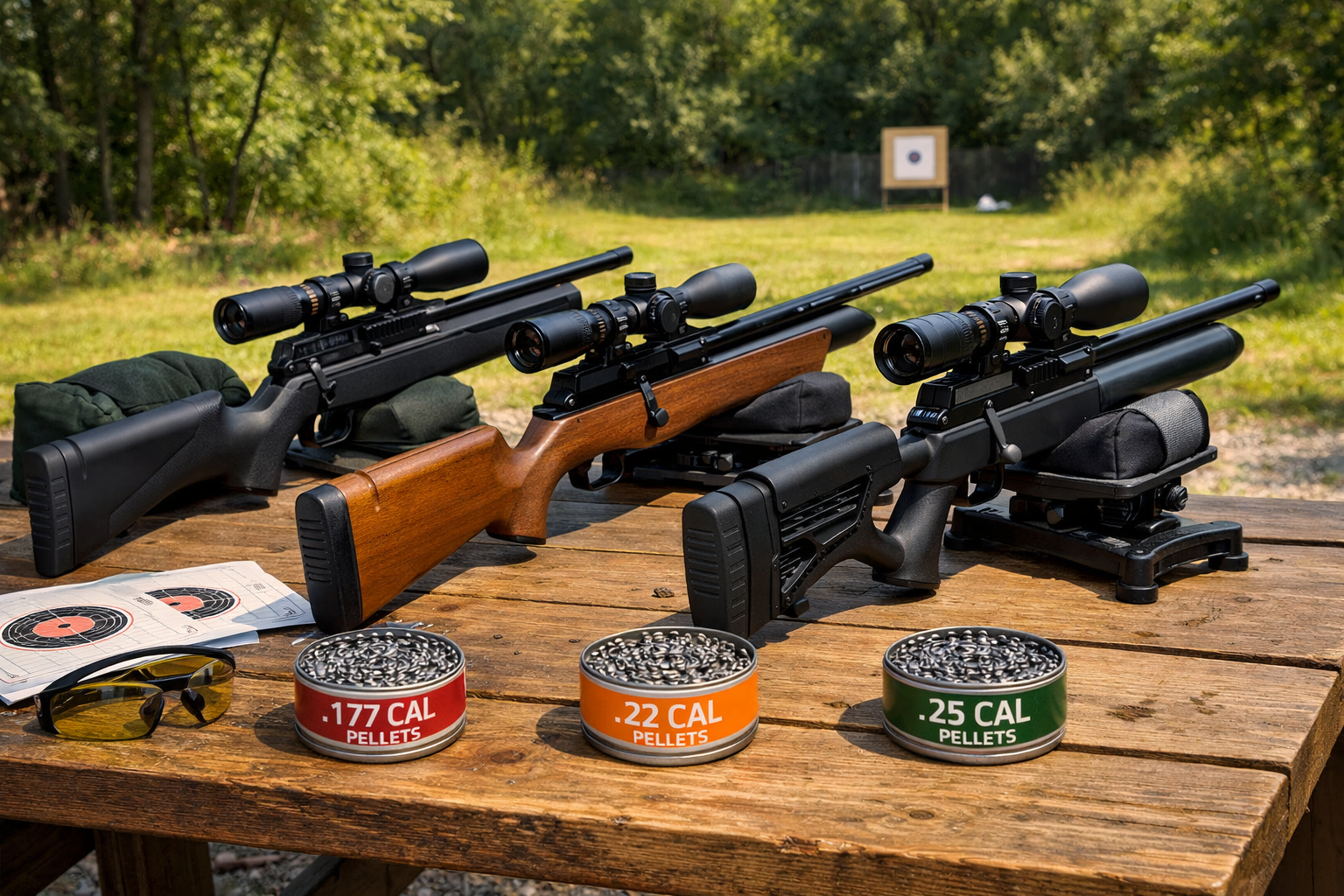
Choosing Your First PCP Caliber: Balancing Accuracy, Power, and Cost in Canada
Picking your first PCP rifle caliber is one of those decisions that feels permanent—but it doesn’t have to be stressful. The “best” caliber depends on what you’ll do most: paper targets, pest control, small-game hunting where legal, or a bit of everything. In Canada, the choice also intersects with practical realities: pellet availability and price, where you can shoot, and how much power you can use safely and responsibly.
This guide breaks down PCP calibers explained in plain terms, with a Canada-first perspective. We’ll compare .177 vs .22 vs .25 PCP using the factors that matter day-to-day: accuracy, power, wind drift, shot count, noise, and long-term cost. By the end, you should be able to choose your first PCP rifle caliber confidently—without buying more gun (or more caliber) than your needs require.
How PCP calibers really differ (beyond the number)
Caliber changes more than just pellet diameter. It affects pellet weight options, how efficiently a rifle uses air, how much energy is delivered to the target, and how forgiving the setup is in real conditions.
- Accuracy potential: All three calibers can be extremely accurate. The difference is usually about practical accuracy in wind and at longer distances, not mechanical accuracy.
- Energy and penetration: Larger calibers typically carry more energy with heavier projectiles, which matters for ethical hunting and clean dispatch.
- Trajectory and holdover: .177 usually shoots flatter at typical velocities, which can simplify aiming for targets at varied ranges.
- Wind drift: Heavier pellets (often .22 and .25) generally buck wind better, improving consistency outdoors.
- Air use, shot count, and noise: Bigger calibers usually use more air to achieve hunting-level energy, which can reduce shot count and increase report depending on platform and tuning.
- Cost per shot: .177 is usually cheapest, .25 typically costs more, and .22 often lands in the middle.
In other words: caliber is a system choice—pellets, optics, distance, and your typical shooting environment all come along for the ride.
Choosing PCP caliber Canada: the realities that influence your pick
Canada has a few practical considerations that can steer a first-time buyer toward one caliber over another.
- Where you’ll shoot: Backyard-friendly ranges, rural properties, and formal ranges all impose different expectations around noise and backstops.
- Pellet availability: Consistency matters. It’s easier to stay accurate when you can stick to one pellet your rifle likes. Check availability of your preferred weights and styles before committing to a caliber.
- Your typical distances: Many new PCP owners shoot 10–35 yards first, then stretch to 50+ as skills grow. The “best” caliber can change with distance and wind exposure.
- Purpose and legal/ethical hunting: For hunting (where legal), enough energy and the right pellet choice matter more than raw velocity. If hunting is even a possibility, that can push you toward .22 or .25 for a wider comfort zone.
If you’re still comparing platforms and features, it can help to read a broader buyer’s overview first:How to Choose the Right PCP Rifle: A Buyer's Guide.
https://cdn.shoplightspeed.com/shops/624886/files/65163018/650x650x2/jts-airacuda-max-177-cal.jpg
.177 vs .22 vs .25 PCP: a practical comparison
.177 caliber: the accuracy and affordability champion
.177 is often the easiest entry point for new PCP owners. It’s widely used for target shooting, plinking, and skill-building because it’s efficient and typically offers the lowest cost per shot.
- Best for: paper targets, spinners, reactive targets, shorter-range pest control where appropriate, and high-volume practice
- Strengths: flatter trajectory at common setups, high shot counts, usually quieter at comparable “useful” energies, and broad pellet selection at good prices
- Trade-offs: more sensitive to wind at longer ranges; smaller pellet mass can limit margin for error on hunting applications
If your primary goal is to become a better shooter—tight groups, consistent fundamentals, lots of trigger time—.177 is hard to beat. It also tends to be forgiving for newcomers who haven’t built a wind-reading habit yet because most early shooting happens at modest distances.
Browse options here:.177 Cal PCP Rifles.
.22 caliber: the do-it-all sweet spot for many Canadians
If there’s a “default” recommendation for a first PCP rifle caliber when hunting or outdoor shooting is on the table, it’s often .22. The pellet is heavier than .177, which helps with wind drift and energy retention, while still being common, widely supported, and reasonably priced.
- Best for: mixed-use shooting, outdoor plinking, pest control, and small-game hunting setups (where legal) with an emphasis on ethical energy and pellet selection
- Strengths: good balance of trajectory and retained energy, typically better wind performance than .177, broad availability, and plenty of proven hunting pellets
- Trade-offs: a bit more drop than .177; may use more air than .177 at similar performance goals
For many shooters, .22 is the caliber that still feels fun on paper at 25 yards but also feels confident when the wind picks up or when you step into more serious outdoor shooting. That balance is why “.22” often shows up in conversations about the best PCP caliber for hunting in the general small-game sense, as long as the rifle is set up appropriately and used responsibly.
Browse options here:.22 Cal PCP Rifles.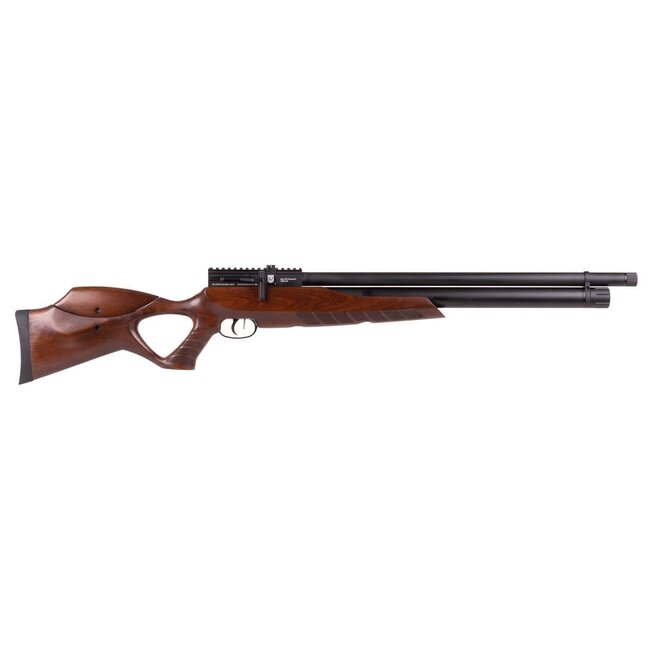
.25 caliber: more authority, more air, more cost per shot
.25 is popular with shooters who want maximum downrange energy from a traditional pellet platform. It can be excellent for hunting-oriented setups and for shooters who prioritize wind resistance and impact over a flat trajectory.
- Best for: hunting-focused PCP setups (where legal), longer-range pest control contexts, and windy outdoor conditions where heavier projectiles help consistency
- Strengths: strong retained energy, often reduced wind drift compared to smaller calibers, and decisive impact on reactive targets
- Trade-offs: more pellet drop requiring more holdover/rangefinding discipline, typically fewer shots per fill, higher pellet cost, and sometimes louder report depending on tune
.25 shines when your setup and use-case can take advantage of it: more open space, longer distances, and a rifle configured for consistent energy. For a first-time owner who mainly shoots paper and spinners at moderate ranges, it can feel like overkill. But for the right shooter, it’s incredibly satisfying and capable.
Browse options here:.25 Cal PCP Rifles.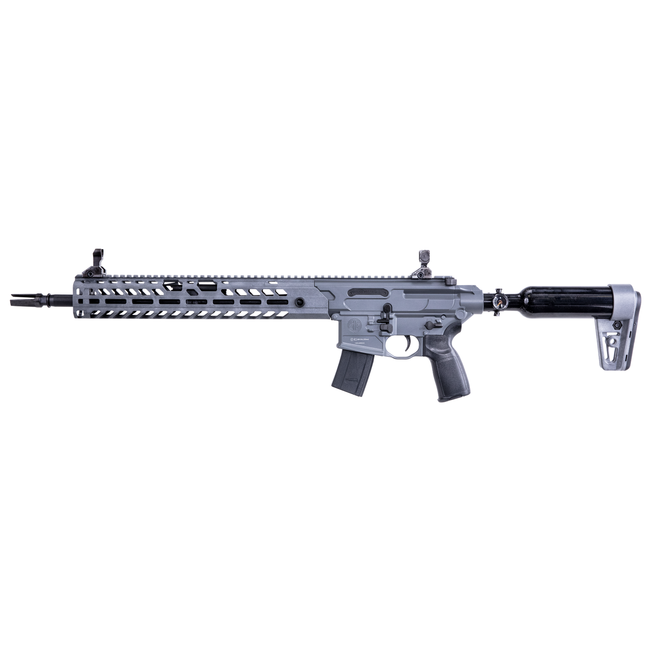
Accuracy: what matters more than caliber
New PCP owners often worry they’ll pick a caliber that “isn’t accurate.” In reality, modern PCPs can be match-accurate in any of these calibers if you do the basics well. Practical accuracy depends more on:
- The pellet your barrel likes: Two rifles of the same model can prefer different pellets. Testing a few weights and head sizes is normal.
- Consistency (spread in velocity): Regulated PCPs and good tuning can tighten extreme spread, which tightens vertical dispersion at distance.
- Optics and zero: A good scope, solid mounts, and a careful zero reduce “mystery misses.”
- Wind reading: Wind is often the biggest variable outdoors. Heavier pellets help, but technique matters more.
So while this is a PCP rifle caliber guide, remember: caliber helps you manage conditions, but it doesn’t replace pellet testing and fundamentals.
Power and ethical hunting considerations
Power needs are driven by your intended target and distance, and by the requirement to place shots precisely. In general terms, larger calibers make it easier to deliver sufficient energy with common pellets, but the full picture includes pellet construction and accuracy.
- .177: Capable for targets and close-range use. For hunting contexts, it can be effective in the right hands and within responsible limits, but it offers less margin for error.
- .22: Often chosen as the “balanced” hunting caliber because it can deliver meaningful energy with good pellet options while remaining versatile for general shooting.
- .25: Commonly selected when you want more impact and better wind resilience, accepting fewer shots per fill and more pronounced trajectory.
Whatever you choose, the ethical approach is consistent: know your distances, confirm point of impact, pick a pellet that shoots accurately in your rifle, and keep shots within a range where you can place them precisely every time.
Cost in the real world: pellets, air, and accessories
When people talk about “caliber cost,” they usually mean pellets. But for PCP ownership, there are a few layers:
- Pellet cost per shot: Generally lowest in .177, moderate in .22, highest in .25 (with exceptions depending on brand and type).
- Air consumption: To achieve hunting-level power, .25 often uses more air per shot. That can mean more frequent fills, which matters if you’re using a hand pump or a smaller tank.
- Testing cost: New owners should budget for a few tins to find what groups best. This is normal and worth doing early.
If you want to explore pellet options by caliber and purpose, start here:Pellets.
Trajectory and wind: why “flatter” isn’t always better
.177’s flatter trajectory at common velocities is real and helpful—especially for plinking at unknown distances. But trajectory is only half the outdoor story. Wind drift can open groups dramatically, and lighter pellets typically move more in gusts.
A useful way to think about it:
- If you shoot mostly at known distances: You can learn holdover or use a rangefinder and a ballistic app. Drop becomes manageable.
- If you shoot in variable wind: Heavier pellets can make your results more consistent even if you give up some flatness.
This is why the .177 vs .22 vs .25 PCP conversation often ends with: “How windy is your shooting spot, and how far are you actually shooting?”
Shot count and convenience: the underrated factor for first-timers
Your first PCP experience is strongly shaped by how convenient it is to keep shooting. Shot count per fill depends on the rifle’s reservoir size, regulator/tune, and the energy you’re running—but caliber plays a role because bigger pellets typically require more air to push at useful energy levels.
- .177: Often excellent shot counts and easy day-long sessions.
- .22: Still very practical for most rifles; shot count remains comfortable.
- .25: Can be perfectly fine, but expect fewer shots per fill in many setups, especially at higher power.
If you’re hand-pumping, this matters a lot. If you’re using a tank or compressor, it still matters—but convenience becomes less of a barrier.
Quick recommendations by use-case
If you want a simple decision framework for choosing PCP caliber Canada, start here:
- Mostly targets, lots of practice, lowest ongoing cost: .177
- One rifle for targets and hunting-leaning use (where legal): .22
- Hunting-focused, windier conditions, prioritize impact and retained energy: .25
And if you’re unsure, .22 is often the safest “first PCP rifle caliber” for a mixed-use shooter because it sits in the middle on nearly every trade-off.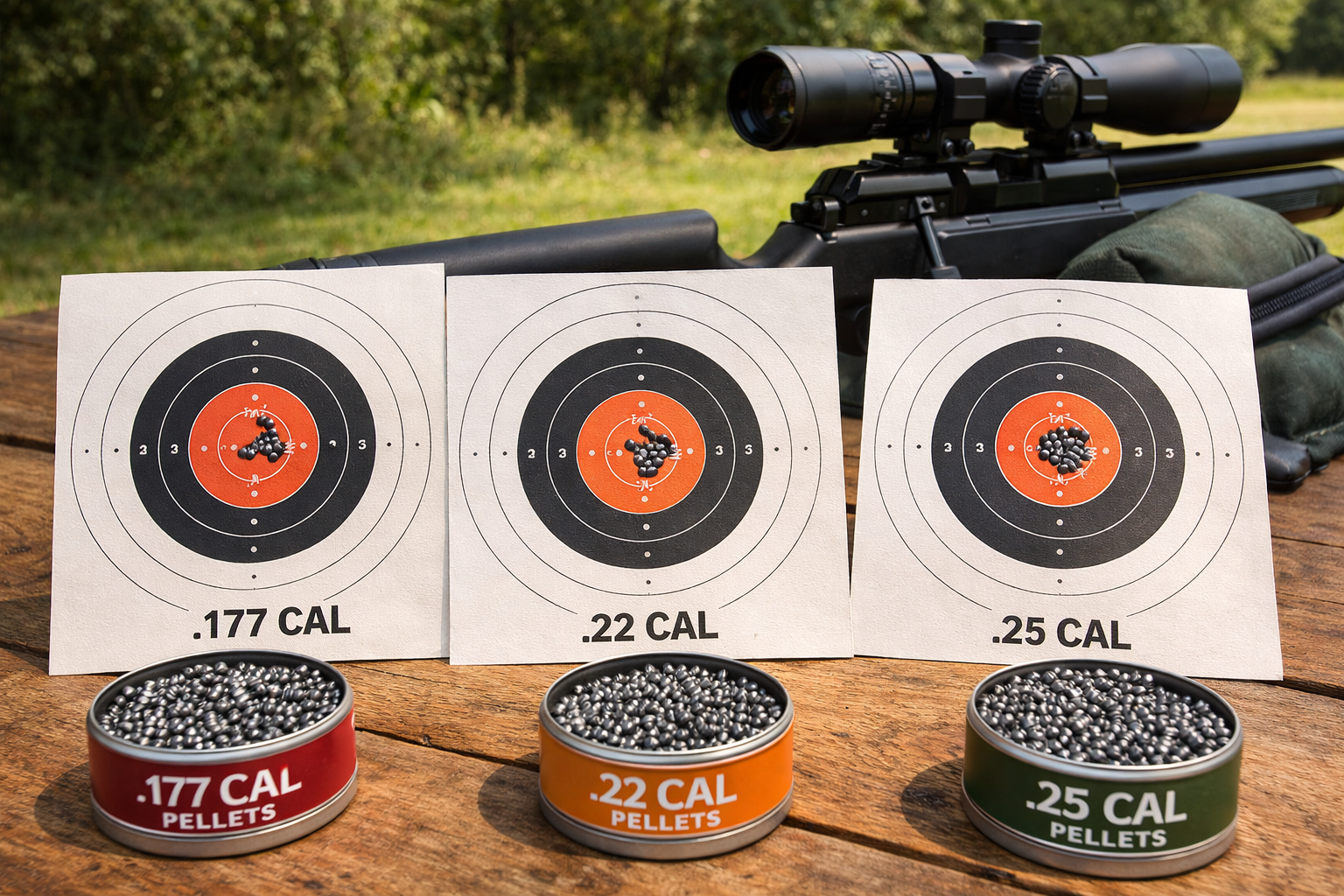
FAQ: common first-caliber questions
Is .177 always more accurate than .22 or .25?
No. Mechanical accuracy can be excellent in any caliber. .177 often feels “easy” because of flatter trajectory, but outdoors, .22 and .25 can produce tighter real-world groups due to reduced wind drift.
What is the best PCP caliber for hunting?
For many small-game and pest-control setups (where legal), .22 is a common starting point because it balances pellet availability, manageable trajectory, and solid energy potential. .25 becomes attractive when you want more downrange authority and improved wind performance, and you’re comfortable with the extra air use and cost.
Will .25 be too much for a first PCP?
Not inherently. It’s just more specialized. If your primary shooting is paper at 20–35 yards, the extra drop and cost may not add much value. If your primary goal is outdoor hunting-style shooting at longer ranges, .25 can make a lot of sense.
Where should I browse PCP rifles by caliber?
You can view the main PCP selection here:PCP Rifles, then filter by caliber using the dedicated collections for.177,.22, and.25.
Bottom line: pick the caliber that supports your most common day
The best caliber isn’t the biggest or the fastest—it’s the one that makes your typical shooting easier, more consistent, and more enjoyable. If you want high-volume practice and simple aiming, .177 is a strong start. If you want one versatile rifle that can lean into hunting-style performance while still being enjoyable on targets, .22 is the classic middle ground. If your priorities are wind resistance and impact for a hunting-focused setup, .25 offers real advantages as long as you accept the added air and pellet cost.
Whichever you choose, the most important step after purchase is the same: pick a couple quality pellets, confirm a solid zero, and spend time learning your holds and wind. That’s what turns a good PCP into a great one.


